Charcoal wall art gives a room something few other styles manage: the sense that someone was genuinely looking at something and drawing it, right there, by hand. Fine lines, soft smudged shading, and the visible tooth of drawing paper showing through — this is art that reads as intimate and observed rather than produced. This guide covers 11 proven rules for where charcoal wall art works, how to tell a genuine sketch from a filtered photograph, and how to display it at the smaller, closer scale the style rewards.
Charcoal wall art occupies a specific register in interior design — quieter and more restrained than a bold statement piece, but with a warmth and immediacy that a flat, glossy print doesn’t have. Where other styles ask to be seen from across a room, charcoal wall art often asks to be seen up close, which changes where and how it belongs in a home.
This guide walks through charcoal wall art room by room, the difference between a genuine sketch and a digitally filtered photograph, and how to size and place it so its intimacy reads as intentional rather than simply small.
Charcoal Wall Art for Studios and Creative Spaces
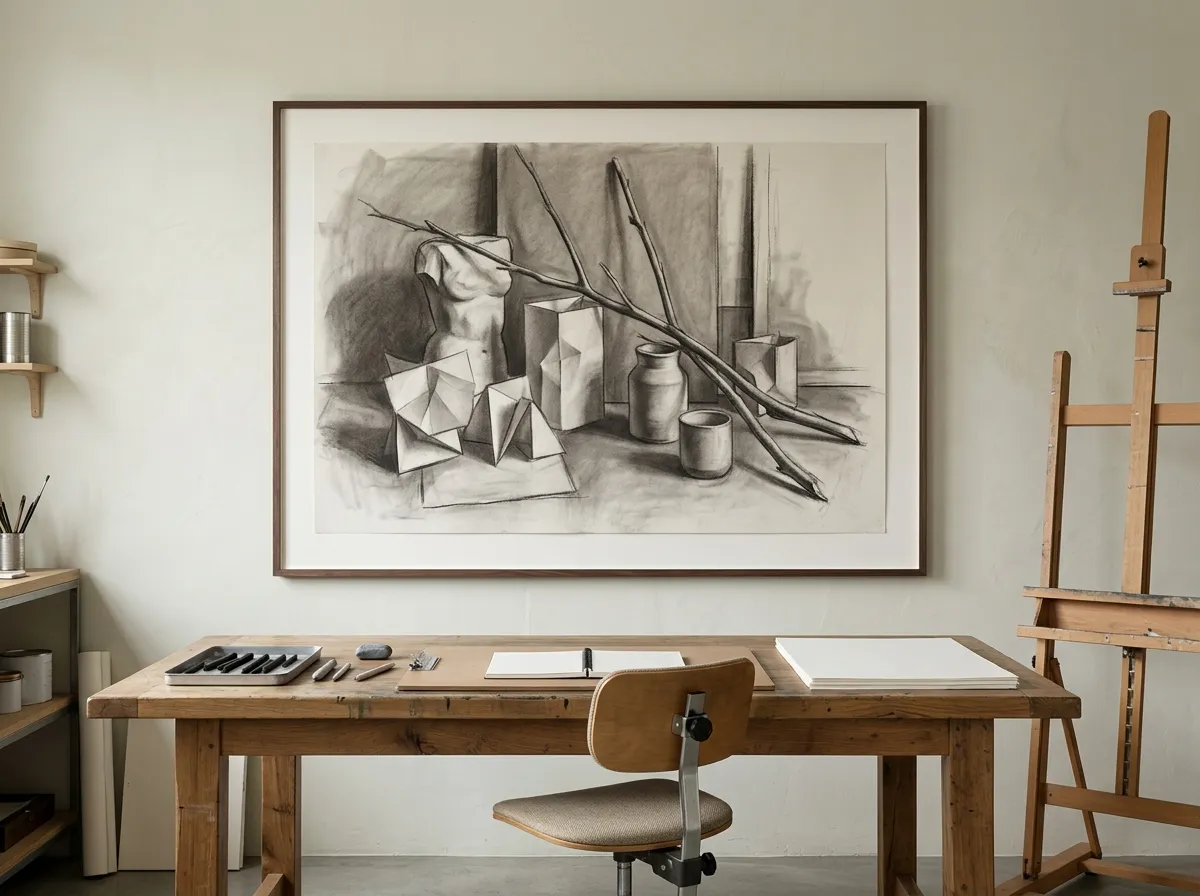
A studio or creative workspace is the most natural home for charcoal wall art — it’s a room already built around the tools and materials the art itself is made from, which gives a genuine sketch a kind of authority a more polished, painterly piece wouldn’t have in the same setting.
For studios, a bolder, more gestural charcoal piece tends to suit the working, in-progress energy of the room better than a highly finished, delicate study. The visible looseness of confident charcoal linework fits naturally alongside the actual working materials — easels, drawing tables, open sketchbooks — that a real creative space accumulates.
Charcoal Wall Art for Hallways and Stairwells
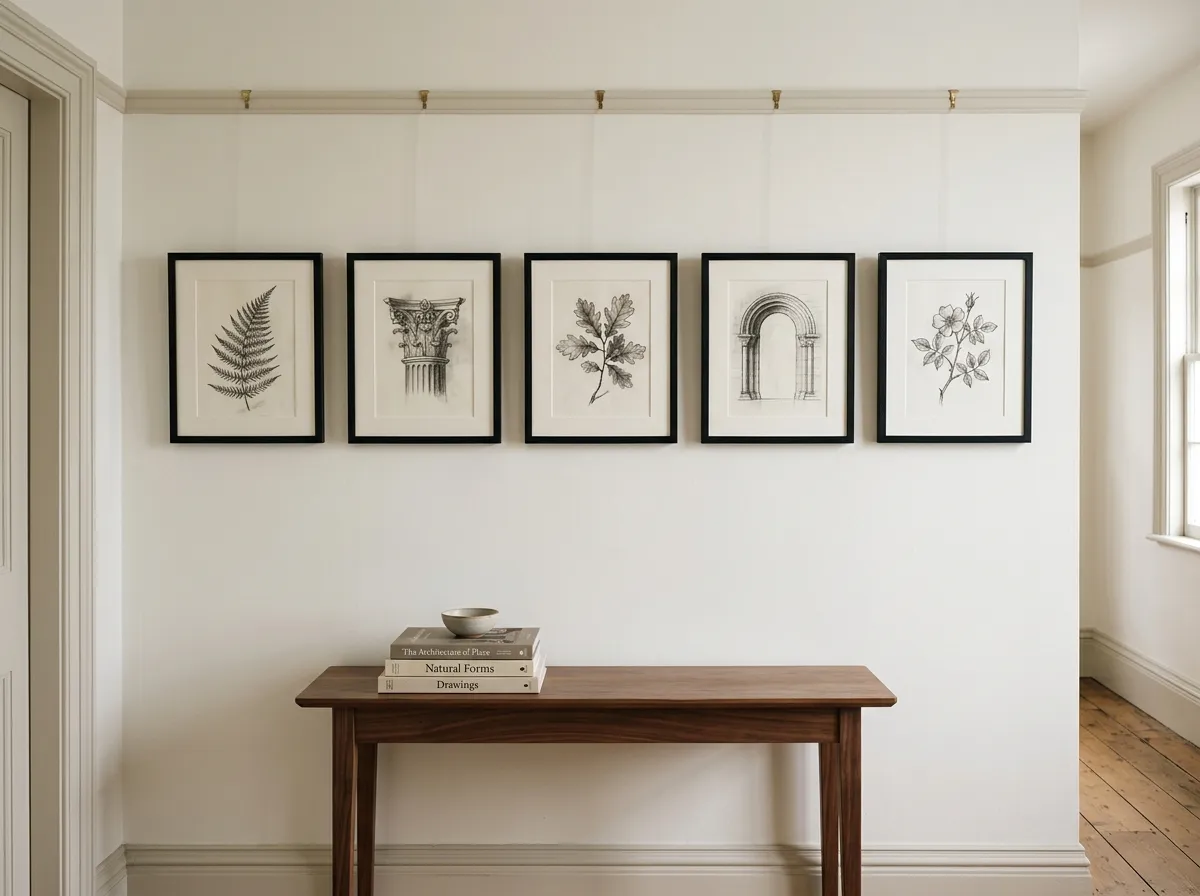
Hallways and stairwells are a strong showcase for charcoal wall art, since they’re spaces people pass close to repeatedly rather than view from a fixed seated distance — exactly the proximity that lets fine charcoal linework register. A grid or gallery-style grouping of several small sketches suits the format of a hallway wall better than a single oversized piece.
A series of related but individually distinct charcoal studies — the same technique applied to a few different subjects — reads as a considered collection rather than a single artwork stretched too thin across too much wall.
Charcoal Wall Art for Nurseries and Children’s Rooms
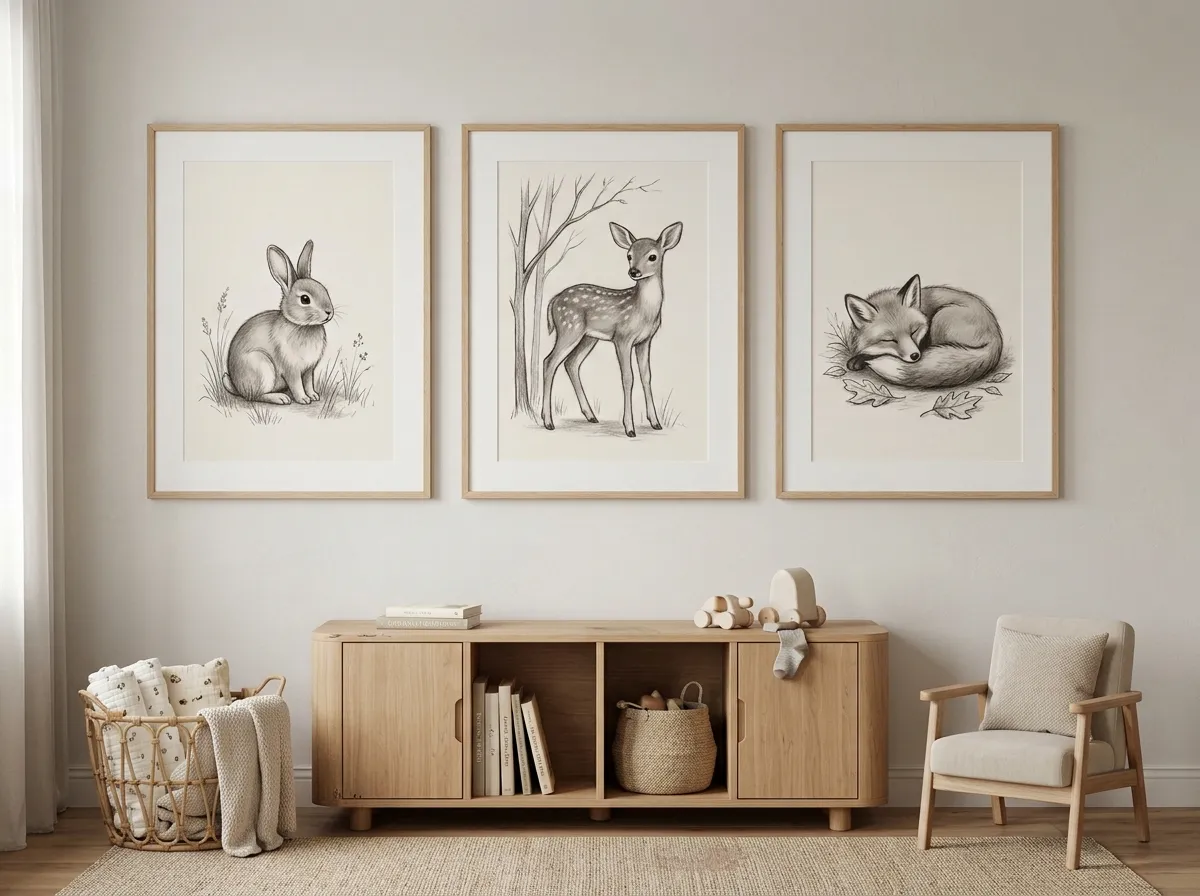
Gentle animal studies are one of the most enduring subjects in charcoal wall art for nurseries and children’s rooms — a single soft, simply rendered creature reads as calming rather than stimulating, which suits a space designed around rest far better than bright, saturated art.
Because nurseries typically call for smaller, softer pieces than an adult living space, charcoal wall art’s naturally intimate scale is a genuine advantage here rather than a limitation to work around. A single quiet study, hung slightly lower than standard adult eye level, gives the room warmth without visual noise.
Charcoal Wall Art for Home Offices
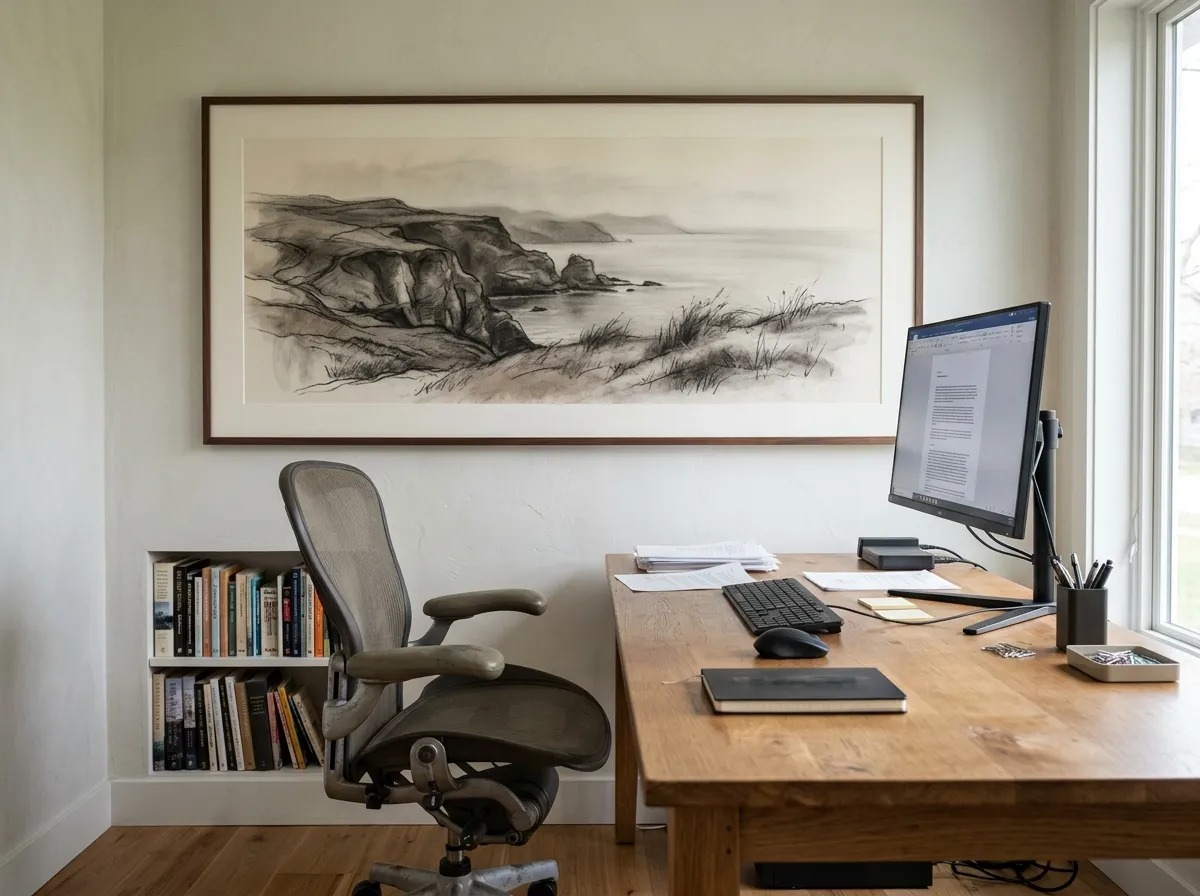
A home office suits charcoal wall art’s quieter register well — the style adds visual interest without the saturation or drama that can pull focus during a work day. A fine, detailed sketch also rewards the kind of repeated close-range glances a desk-facing piece naturally gets.
For video calls, charcoal wall art’s muted, low-contrast palette generally photographs well on camera, without the exposure challenges a brightly coloured or high-gloss piece can sometimes create in typical laptop camera lighting.
What Creates Genuine Charcoal Technique
Genuine charcoal wall art relies on real physical qualities that are hard to fake convincingly: varied line weight depending on pressure and angle, soft smudged transitions where the medium is blended by hand, and the visible tooth of the drawing paper showing through lighter passages. This is meaningfully different from a photograph run through a digital “sketch” filter, which tends to apply a uniform, mechanically even effect across the whole image.
MutedCanvas’s Carbon Sketch technique is built specifically around preserving this genuine hand-drawn quality — printed with attention to the natural irregularity of real charcoal work rather than smoothing it into a uniform digital effect. This is what separates charcoal wall art that reads as an actual sketch from one that reads as a photo filter applied for effect.
Sketch Wall Art vs. a Finished Painting
Sketch wall art occupies a deliberately different register from a finished, fully rendered painting — it embraces visible process, incompleteness, and economy of line rather than working to conceal them. A confident, spare charcoal sketch can carry as much presence as a much more elaborate painted piece, because the restraint itself is part of the appeal.
This makes charcoal wall art a useful contrast piece in a room otherwise built around more fully resolved art or furnishings — a single sketch among more finished pieces reads as a considered curatorial choice rather than an unfinished one, provided the rest of the room signals that the sparseness is intentional.
The Intimacy of Small-Scale Charcoal Display
Charcoal wall art is one of the few styles where going smaller often serves the work better rather than diminishing it. Fine linework and delicate shading reward the kind of close viewing distance a large, room-dominating piece doesn’t invite in the same way — a modest, closely hung sketch draws someone in rather than announcing itself from across the room.
This makes charcoal wall art particularly well suited to spaces defined by proximity rather than distance — a desk, a bedside table, a hallway someone walks past at close range — where its intimacy is actually experienced rather than lost.
Pairing Charcoal Wall Art With Neutral Palettes
Charcoal wall art’s monochrome palette makes it a genuinely flexible pairing choice — it sits comfortably within a fully neutral scheme without needing to match a specific accent colour, and provides tonal contrast in a room built around warmer tones without clashing.
Natural materials — raw wood, linen, unglazed ceramics — tend to complement charcoal wall art’s hand-made quality better than high-gloss or heavily lacquered surfaces, which can feel visually at odds with the softness of genuine charcoal shading. A matte or lightly textured frame finish, rather than a glossy one, keeps this consistency intact.
Which Interior Styles Suit Charcoal Wall Art
Charcoal wall art’s restraint and monochrome palette make it broadly compatible across interior styles.
Modern minimalism — a natural fit, since charcoal wall art’s quiet linework and generous negative space align directly with minimalist principles.
Scandinavian and Japandi interiors — the pale, natural palette common to both styles provides an ideal neutral backdrop for charcoal’s soft greys.
Traditional and transitional — a fine, detailed charcoal study sits comfortably alongside classic furniture forms, echoing the sketch studies historically found in traditional interiors.
Maximalist and eclectic — a single charcoal piece can function as a quiet counterpoint within an otherwise richly layered room, without disrupting the overall density of pattern and colour.
Scale and Placement for Charcoal Wall Art
Charcoal wall art generally works best at a more modest scale than bolder styles, given how much of its appeal depends on close viewing. A single piece rarely needs to exceed a medium size to carry a wall meant to be viewed at normal room distance; for a genuinely large statement wall, a grid or grouping of several smaller sketches usually reads better than one oversized piece. Standard files run up to the 24×36 inch full-quality ceiling regardless of approach.
Hanging height follows the standard 57-inch centre-height convention for most standalone adult-space placements, with a lower adjustment for nurseries and children’s rooms as noted earlier. Even, soft lighting suits charcoal wall art better than a single harsh spotlight, which can create contrast the medium’s tonal subtlety isn’t built around.
What to Avoid With Charcoal Wall Art
Digital filter effects passed off as genuine sketches. A uniform, mechanically even “sketch” filter applied to a photograph lacks the varied line weight and organic smudging of real charcoal technique.
Oversizing for the sake of scale. A charcoal piece stretched far beyond its natural scale to fill a large wall loses the intimacy and fine detail that make the style distinctive.
Harsh single-point spotlighting. Charcoal’s tonal subtlety reads better under soft, even light than under a single dramatic spotlight, which can create contrast the medium isn’t built around.
Inconsistent grid spacing. When hanging several charcoal sketches together, uneven spacing or misaligned frames reads as cluttered rather than curated.
High-gloss framing. A glossy frame finish sits at odds with the soft, matte quality of genuine charcoal shading.
Charcoal Wall Art by Room — Complete Styling Guide
The table below maps common rooms to sizing, lighting, and placement guidance for charcoal wall art.
| Room | Sizing Approach | Lighting | Placement Note |
|---|---|---|---|
| Studio / creative space | Medium to large, bolder composition | Soft, even natural light | Visible during work sessions |
| Hallway / stairwell | Grid of several small pieces | Consistent, even lighting | 2–3in spacing, aligned tops or centres |
| Nursery / children’s room | Small, gentle composition | Soft, warm ambient light | Lower than standard 57-inch height |
| Home office | Medium, desk-facing scale | Soft, even natural light | Within consistent seated sightline |
Recommended Products for Charcoal Wall Art
Everything you need to frame, light, and display charcoal wall art so its fine detail actually reads.
- Browse our complete Wall Art Ideas guide for every space
- See our Muted Canvas and Moody Interiors guide for a tonally related, bolder technique
- Read our Ink Wash Wall Art guide for another quiet, restrained monochrome style
- See our Bedroom Wall Art Ideas guide for more on small-scale, intimate art placement
Frequently Asked Questions
Charcoal Wall Art That Rewards a Closer Look
The rooms where charcoal wall art works best share a consistent pattern: genuine hand-drawn irregularity rather than a uniform digital filter, a scale that respects the style’s natural intimacy rather than stretching it thin, and soft, even lighting that lets its tonal subtlety actually read. It’s a quiet style, but not a small one in terms of what it asks of a room around it.
Whether displayed as a single fine study above a desk or a full gallery grid along a hallway, charcoal wall art rewards the same principle as any technique-based style: get the material logic right, and the intimacy does the rest. Start with scale — size for how close someone will actually stand, not for the wall alone.
Shop Carbon Sketch Prints →