Boho wall art works differently from almost every other style in this guide — instead of restraint, it depends on considered layering, warm texture, and a room that feels collected over time rather than purchased all at once. This guide covers 11 proven rules for boho wall art, from how it pairs with rattan and textiles to how to source globally-influenced pieces thoughtfully rather than generically.
Bohemian style has matured considerably from its more scattered, anything-goes reputation of a decade ago. The version of boho gaining ground now is calmer and more curated — still layered and warm, but built from natural materials and pieces with real character rather than accumulation for its own sake. Wall art plays a specific role in that shift: it’s often the element that signals whether a boho room reads as genuinely collected or simply busy.
This guide walks through boho wall art room by room, how it pairs with the natural materials the style depends on, and the sourcing considerations that separate a thoughtfully curated boho room from one built on generic pattern.
Boho Wall Art for Living Rooms
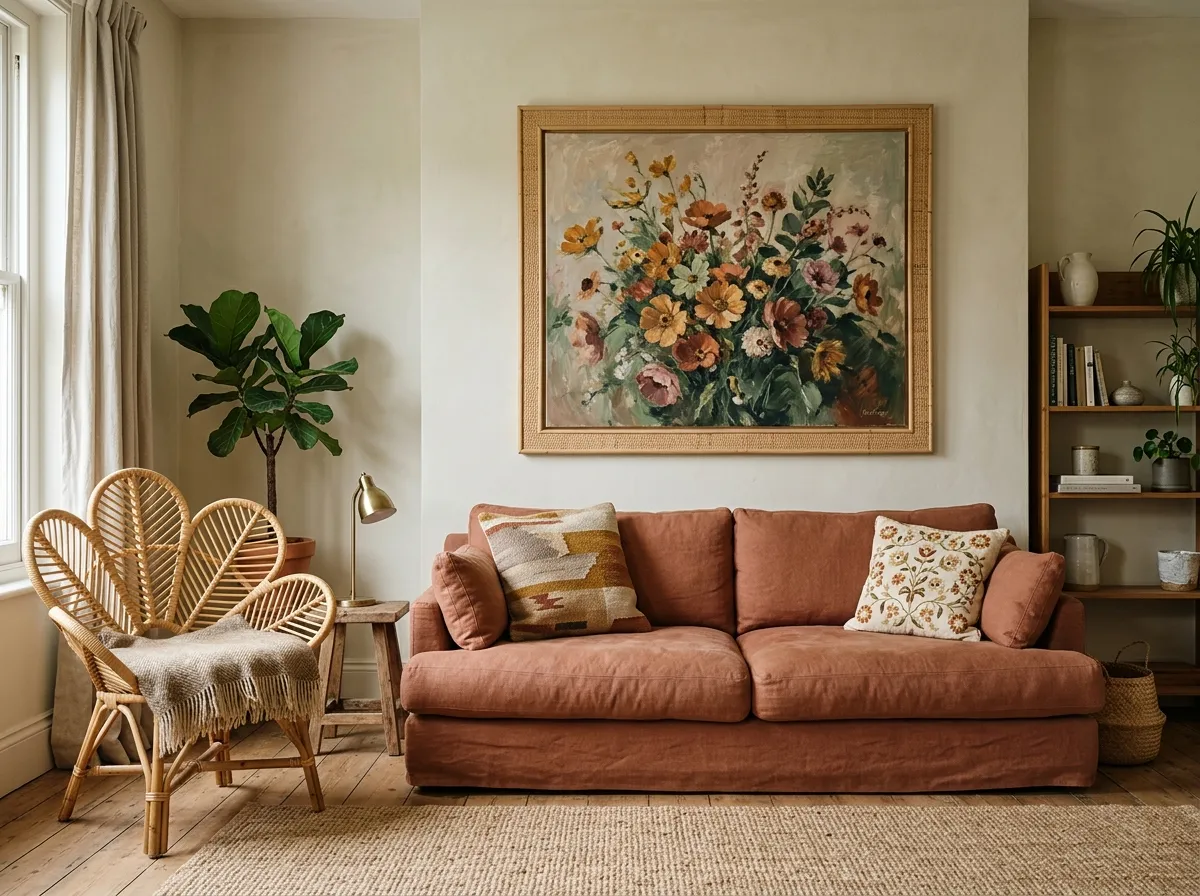
The living room is where boho wall art carries the most weight, since it’s usually the room with the fullest expression of the style’s layered textiles, natural materials, and warm palette. A single considered piece above the sofa gives the room an anchor that the surrounding layers of texture can build around.
Boho wall art in a living room works best when its palette is drawn from the same warm, earthy family as the rest of the room — terracotta, ochre, olive, rust — rather than introducing an unrelated colour story that competes with the layered textiles already doing visual work.
Layering Boho Wall Art With Textiles and Rattan
Boho interiors are built on layering — textiles, natural fibre, and wood all stacked together in a way that reads as collected rather than matched. Wall art fits into that layering logic best when its frame material echoes materials already present elsewhere in the room, particularly rattan, natural wood, and woven detailing.
Where a room already has significant pattern in its rugs and cushions, boho wall art can afford to be the calmer, more unified element in the mix — the layering doesn’t need every single piece in the room to carry its own pattern to read as boho.
Which Technique Suits Boho Interiors
Several MutedCanvas techniques suit boho wall art particularly well, largely because their existing palettes already share the style’s warm, earthy register.
Botanical Meadow — warm, impressionist florals are close to a natural default for boho wall art, echoing the style’s love of organic, plant-inspired subjects.
Amber Varnish — warm honey-amber glaze tones suit boho’s collected, slightly vintage-leaning sensibility particularly well.
Impasto Linen — genuine dimensional texture pairs naturally with boho’s emphasis on tactile, handmade-feeling materials.
Muted Canvas — for the darker, moodier “dark boho” direction, desaturated cinematic tones against deep walls suit this specific substyle well.
Boho Wall Art for Sunrooms and Plant-Filled Spaces
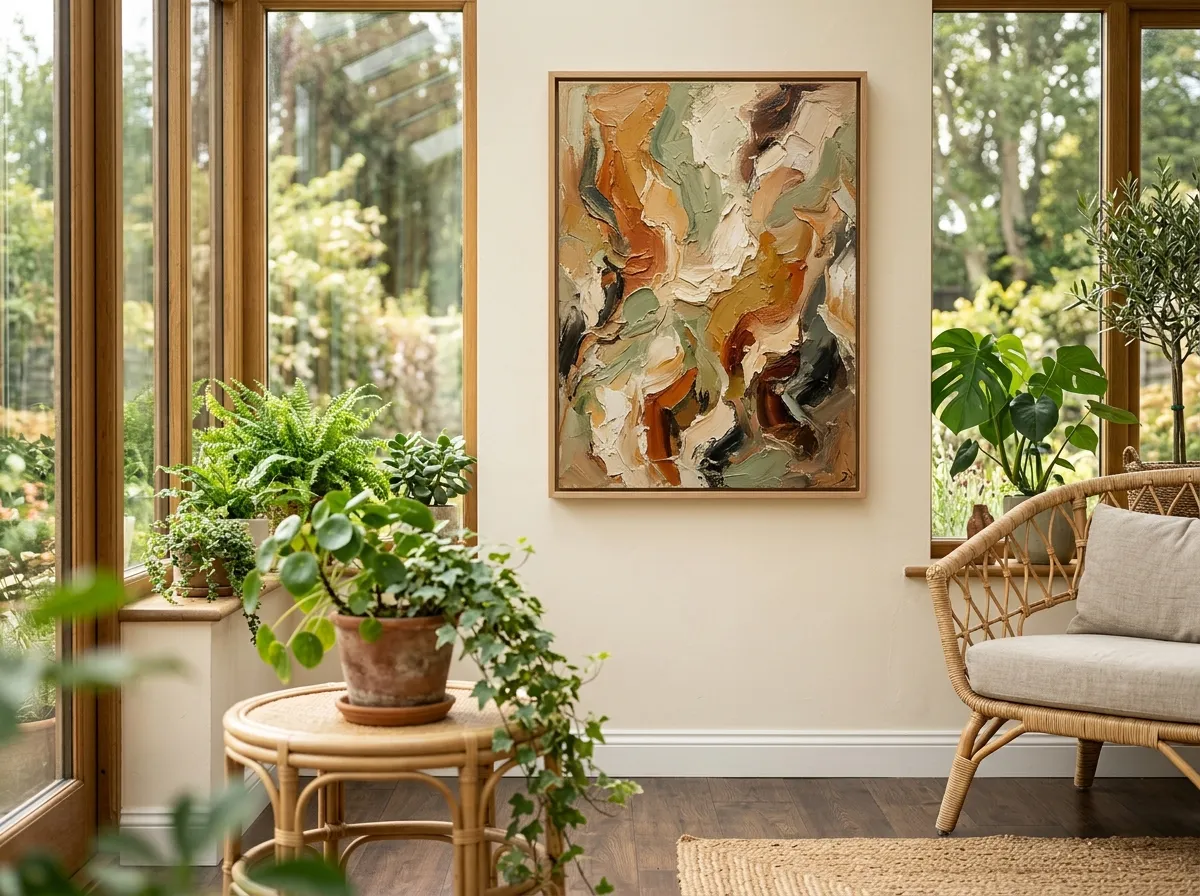
A sunroom or plant-filled space is one of the most natural settings for boho wall art, since the abundant natural light and greenery already establish the organic, nature-connected mood the style is built around. A piece with genuine texture reads especially well here, where light shifts across the room throughout the day.
Because plants themselves carry real visual weight in these spaces, boho wall art benefits from a slightly more restrained placement than in a living room — positioned so it isn’t visually competing with a large plant directly in front of it.
Gallery Walls — Boho Wall Art’s Natural Format
Unlike more restrained styles, boho wall art is genuinely well suited to a fuller gallery-wall arrangement — mismatched frame styles, varied sizes, and a mix of techniques all read as intentional collection here in a way they wouldn’t in a more minimal room.
The key to a successful boho gallery wall is a unifying thread running through an otherwise varied grouping — a consistent warm palette, a shared subject family, or frames that share a material even if their styles differ — rather than true randomness.
Sourcing Global Influences Thoughtfully
Bohemian style has always drawn on global textile and craft traditions — Moroccan, West African, and South Asian influences among others — and the most current, well-regarded version of the style treats that influence with real specificity rather than generic, unattributed pattern. The shift away from vague “tribal” motifs toward genuinely sourced, culturally identifiable textiles and craft traditions reflects a broader move toward intentional, informed sourcing rather than surface-level borrowing.
For boho wall art specifically, this means favouring pieces with a clear, honest description of their inspiration and origin over pieces marketed with vague, non-specific cultural language. Where a piece draws on a particular tradition, naming that tradition specifically is more respectful — and generally reads as more considered — than leaving it unattributed.
Boho Wall Art for Reading Nooks
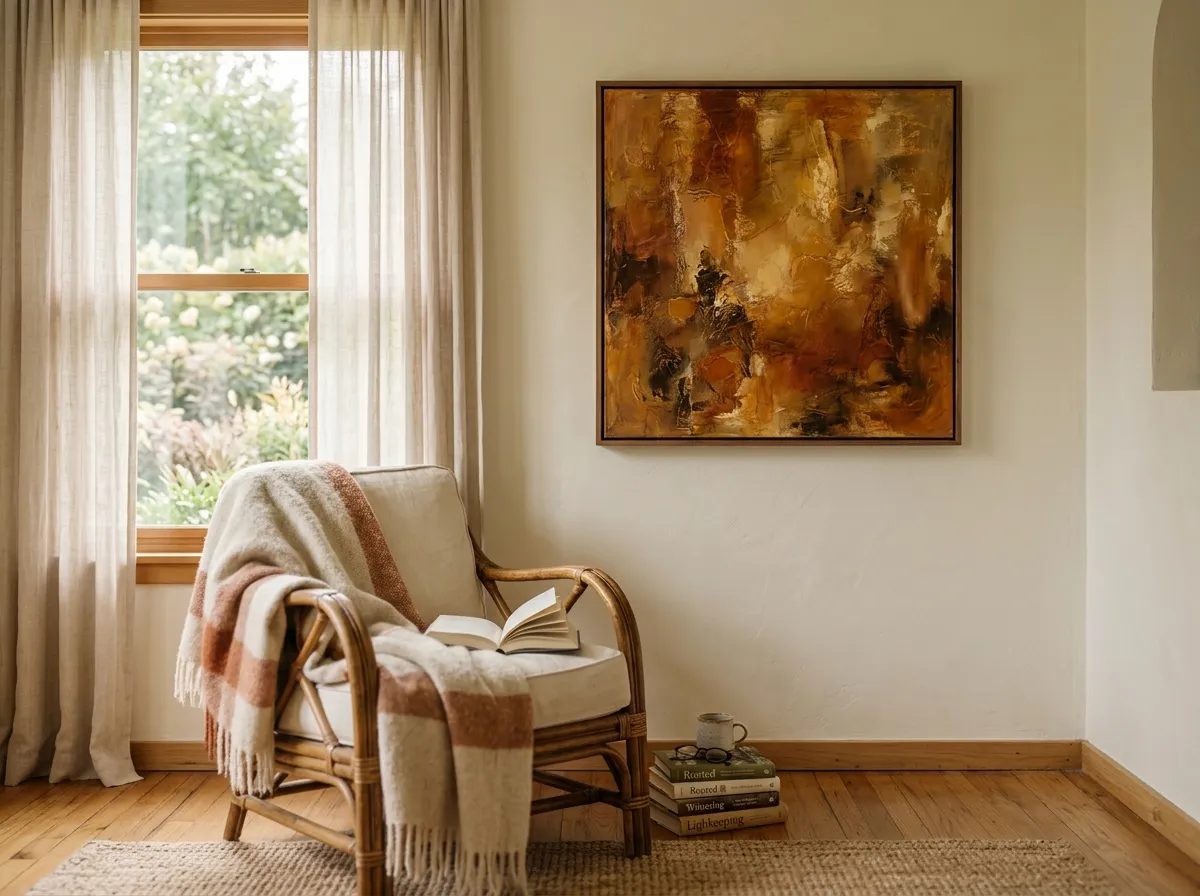
A reading nook suits boho wall art’s warmth particularly well — this is a space meant for lingering, and a rich, glazed piece within close view rewards the kind of extended, unhurried attention the spot is built for.
Because a reading nook is usually a smaller, more contained space, boho wall art here can run smaller than a living room piece while still carrying real presence, provided the warmth and richness of the piece itself does the work that scale would otherwise provide.
Which Interior Styles Overlap With Boho
Boho wall art shares real common ground with several related interior styles, each applying its layered, natural-material sensibility slightly differently.
Coastal boho — a lighter, breezier interpretation, pairing boho’s natural materials with a paler, more beach-influenced palette.
Modern boho — tempers boho’s layering with cleaner lines and a more restrained overall silhouette.
Jungalow — leans even further into plants and organic pattern than traditional boho, with wall art that echoes botanical or nature subjects directly.
Organic modern — shares boho’s love of natural materials and texture, applied with a more pared-back, less densely layered hand.
Boho Wall Art for Dining Rooms
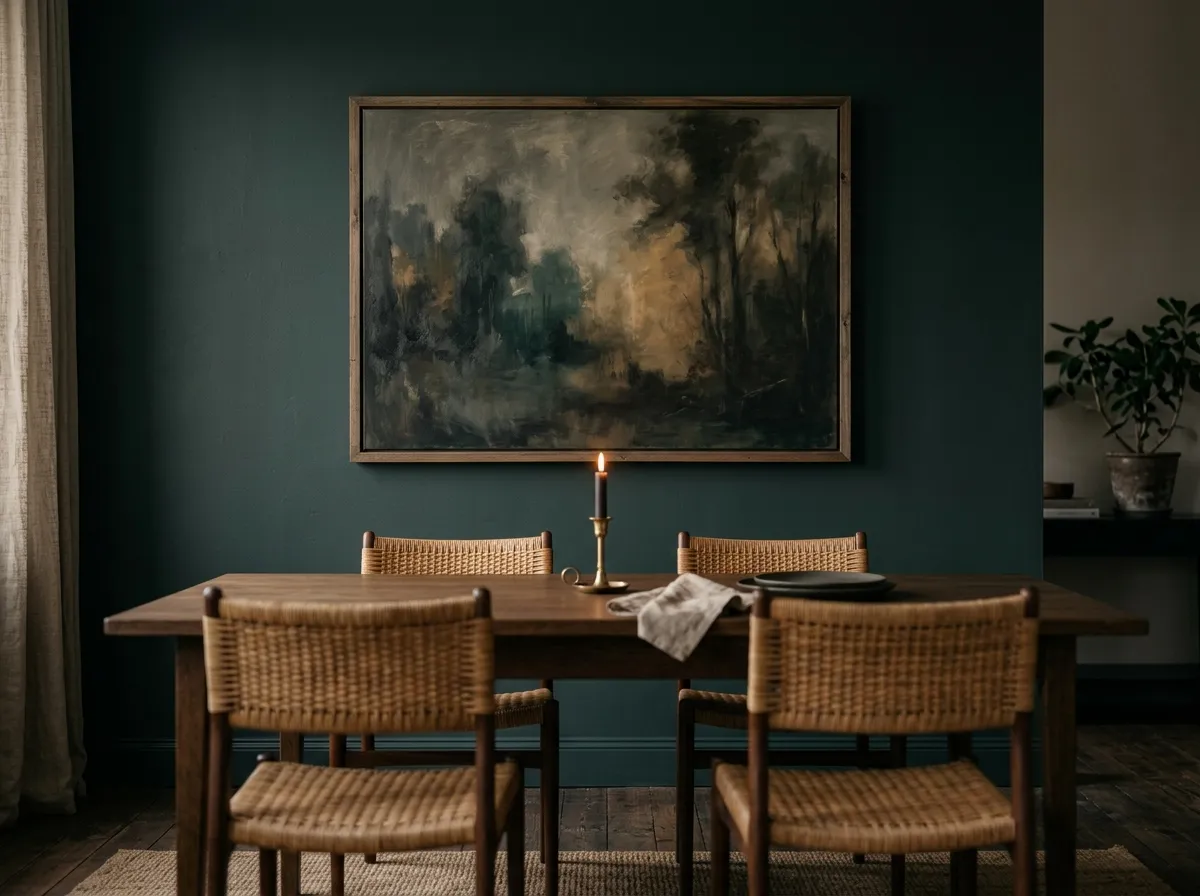
Dining rooms suit the deeper, moodier “dark boho” direction particularly well — a jewel-toned accent wall paired with warm, low evening lighting gives boho wall art a dramatic backdrop that a paler, more traditional boho palette doesn’t offer in the same way.
A single large piece against a deep accent wall gives a dark boho dining room genuine presence, and the technique’s desaturated tones read as rich rather than flat under the kind of warm, low lighting most dining rooms use for evening entertaining.
Scale and Placement for Boho Wall Art
Boho wall art follows the same general sizing formulas as other styles — 60–75% of sofa width above a living room seating area, 75–80% of headboard width in a bedroom — though a gallery-wall approach is a genuinely strong alternative wherever the room’s layered sensibility supports it. Standard files run up to the 24×36 inch full-quality ceiling; a same-technique triptych suits a wall that needs more.
Hanging height follows the standard 57-inch centre-height convention for most standalone placements, with a gallery wall’s overall footprint centred around that same height rather than each individual piece following it separately.
What to Avoid With Boho Wall Art
Generic or unattributed cultural motifs. Vague, non-specific “tribal” pattern language reads as dated and less considered than pieces with a clear, honestly described inspiration and origin.
An unrelated colour story. Boho wall art chosen without reference to the room’s existing warm, earthy palette can read as disconnected from the rest of the layered scheme.
A gallery wall with no unifying thread. Genuine randomness reads as disorganised rather than curated — even a loosely layered boho grouping needs one element tying it together.
Ignoring plant growth over time. In a plant-filled space, art positioned clear of foliage today can become obscured within a year or two as plants mature.
Treating “boho” as a single fixed look. Coastal boho, modern boho, jungalow, and dark boho all call for different technique and palette choices — approaching boho wall art without identifying the specific substyle first often leads to a mismatched result.
Boho Wall Art by Room — Complete Styling Guide
The table below maps common rooms to sizing, technique, and placement guidance for boho wall art.
| Room | Sizing Approach | Best Technique | Placement Note |
|---|---|---|---|
| Living room | 60–75% of sofa width | Botanical Meadow | Anchor for the room’s textile layering |
| Sunroom / plant-filled space | Medium, texture-forward | Impasto Linen | Clear of mature plant growth |
| Reading nook | Small to medium, warm tone | Amber Varnish | Prioritise warmth over scale |
| Dining room (dark boho) | Large statement piece | Muted Canvas | Against a deep jewel-toned wall |
Recommended Products for Boho Wall Art
Everything you need to frame, light, and layer boho wall art into a genuinely curated room.
- Browse our complete Wall Art Ideas guide for every space
- See our Botanical Wall Art for Warm Rooms guide for more on the boho-friendly floral technique
- Read our Textured Wall Art guide for more on the tactile, dimensional quality boho interiors favour
- See our Gold Wall Art guide for another richly layered, warm-toned style
Frequently Asked Questions
Boho Wall Art That Reads as Collected, Not Cluttered
The rooms where boho wall art works best share a consistent pattern: a warm, considered palette drawn from the room’s existing materials, natural frame materials that echo the space’s other textures, and — where a piece draws on global influence — genuine specificity about that inspiration rather than vague borrowing. It’s a style built on layers, but the layers still need a thread holding them together.
Whether it’s a single warm piece anchoring a living room or a full gallery wall built around one unifying thread, the same logic holds throughout. Start with the palette already in the room — let the art extend it, not compete with it.
Shop Botanical Meadow Prints →