Kitchen wall art has to earn its place in a room built for grease, steam, and constant daily use — which is exactly why so many kitchens end up with nothing on the walls at all. Done right, it gives the hardest-working room in the home the same considered finish every other room gets, without needing to be babied or replaced every year. This guide covers 11 proven rules for kitchen wall art, from breakfast nooks to open shelving, and how to choose framing that actually survives the room it’s hung in.
The kitchen has become one of the most design-forward, personality-driven rooms in the home. The large majority of kitchen design professionals now report that kitchens have become genuine spaces for decorative, statement-making elements rather than purely functional ones — a shift that puts real wall art squarely in scope for a room that’s historically been treated as decor-adjacent at best.
This guide walks through kitchen wall art by scenario — breakfast nooks, open-plan layouts, small galley kitchens, open shelving — and the specific framing, placement, and technique choices that keep it looking considered rather than accidental.
Kitchen Wall Art for Breakfast Nooks and Eat-In Kitchens
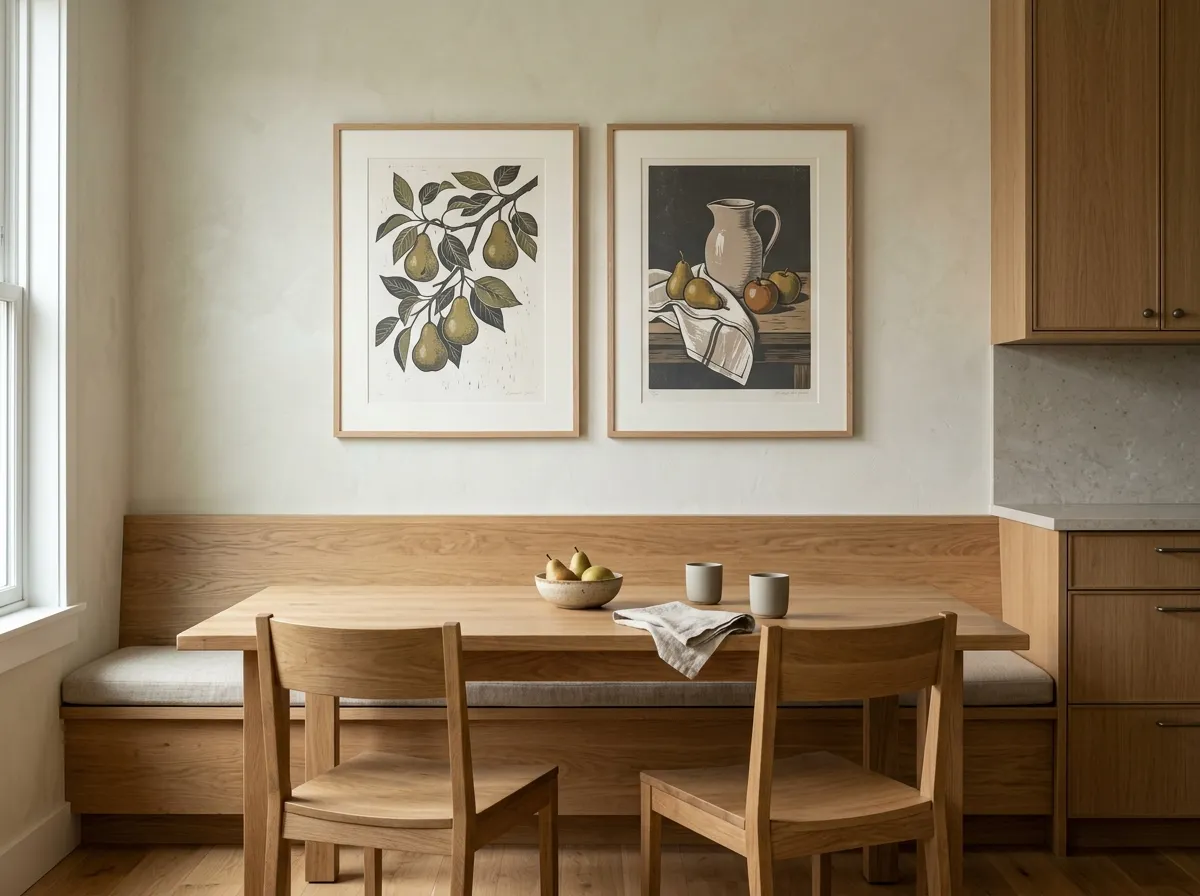
A breakfast nook or eat-in kitchen table is one of the most natural places for kitchen wall art, since it functions as a genuine dining spot rather than a working prep zone — the same placement logic that applies to a dining room applies here, just at a smaller scale.
Eat-in kitchen layouts are becoming more common as a popular feature homeowners specifically request, which makes the wall beside that table an increasingly deliberate design decision rather than leftover space. A warm, approachable piece suits the morning-routine, family-gathering role this spot typically plays.
Grease- and Steam-Safe Placement in a Kitchen
The single most important placement rule for kitchen wall art is distance from the stove, since airborne grease travels further than most people expect and settles as an invisible film long before it’s visible to the eye. A wall directly behind or beside a cooktop is rarely a safe long-term location, regardless of how well-framed the piece is.
Steam from a stovetop or dishwasher is a secondary but real concern — a wall that receives regular steam exposure, even indirectly, benefits from the same sealed framing considerations used in a bathroom.
Which Technique Suits a Kitchen
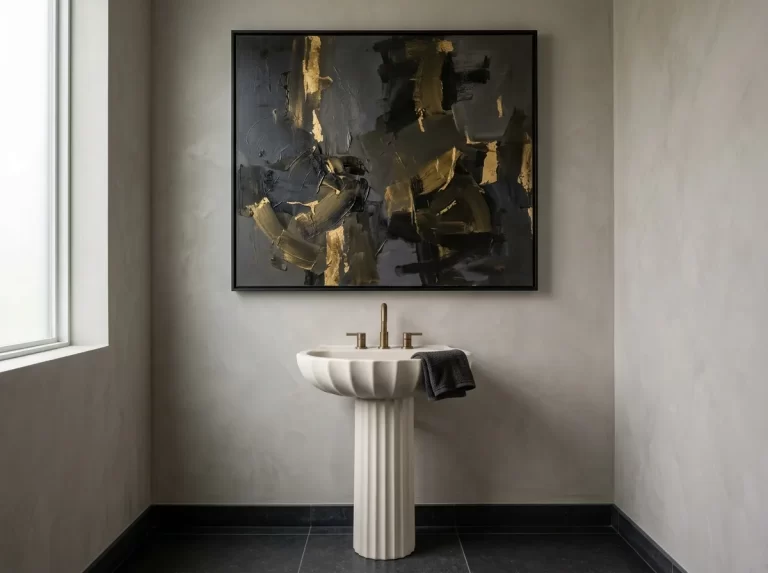
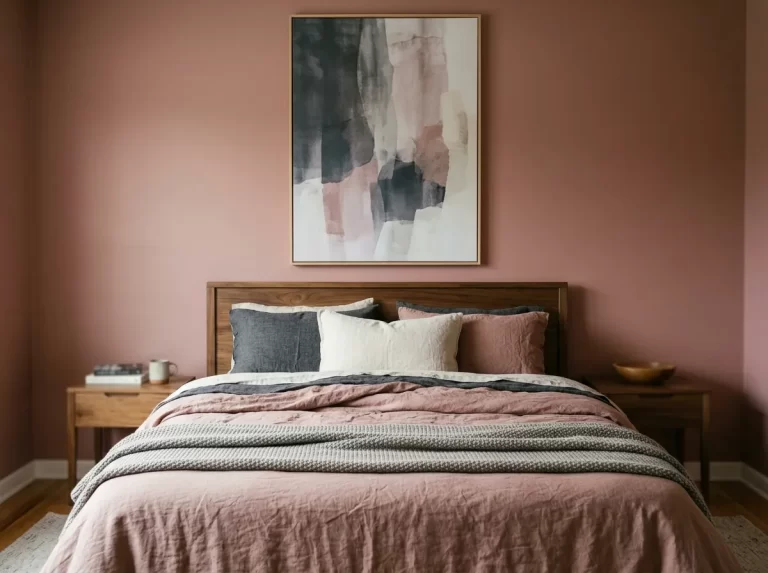
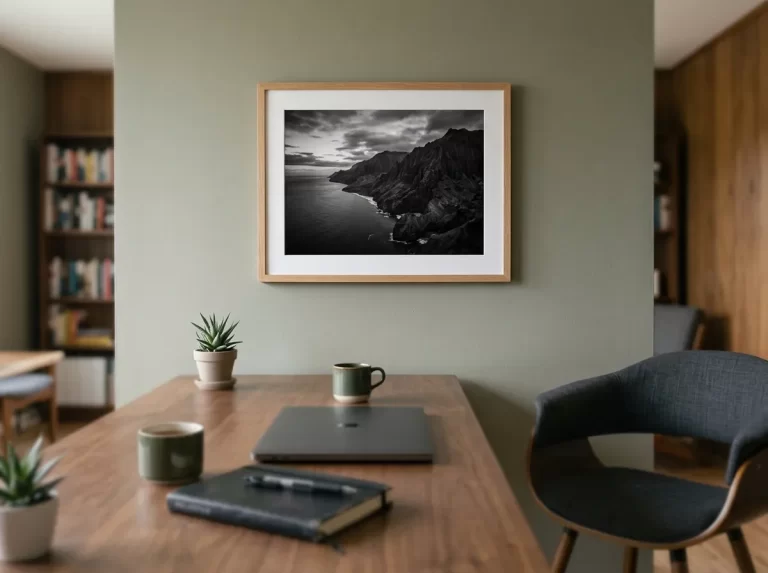
Several MutedCanvas techniques suit kitchen wall art particularly well, largely because their existing palettes echo materials already common in kitchen design.
Botanical Meadow — warm, impressionist florals well suited to a breakfast nook’s welcoming, approachable register.
Muted Canvas — dark, cinematic tones that pair naturally with stone countertops and matte cabinetry in an open-plan kitchen.
Silver Grain Film — high-contrast monochrome that reads well at close range in a smaller galley kitchen.
Carbon Sketch — fine charcoal studies suited to open shelving, where a smaller, more intimate piece can be leaned rather than wall-mounted.
Kitchen Wall Art for Open-Plan Kitchen and Living Spaces
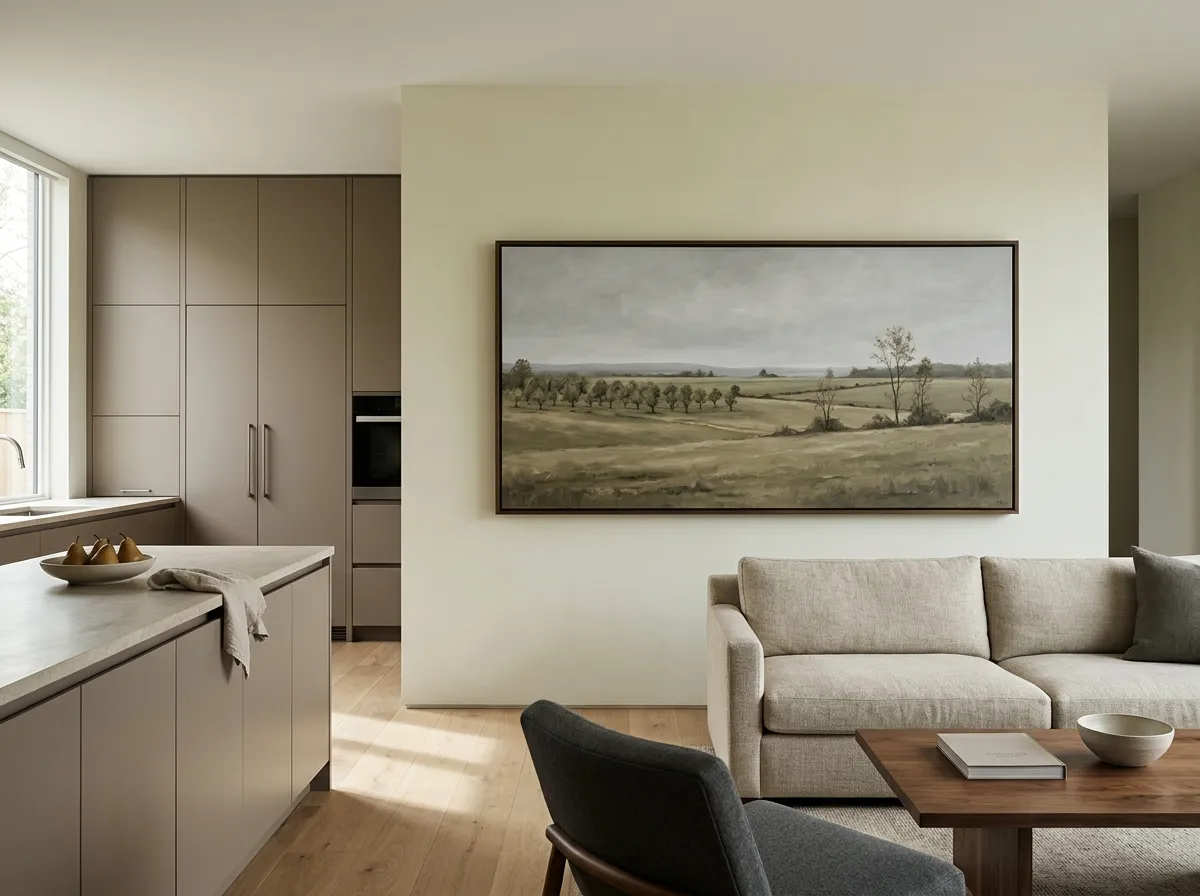
In an open-plan layout, kitchen wall art needs to work as part of the living space’s overall visual story, not as an isolated kitchen-only decision — a piece visible from both the kitchen island and the adjoining seating area should feel consistent with whatever art is already hung in the living space.
This is also where kitchen wall art can afford to be a genuine statement piece, since an open-plan kitchen wall is often the largest and most visually prominent surface in the entire combined space, functioning more like a living room feature wall than a traditional kitchen wall.
Framing for Real Kitchen Conditions
A frame for kitchen wall art benefits from a wipeable, washable finish more than almost any other room’s framing does, since even a well-placed piece will eventually pick up some airborne residue over months of regular cooking. A matte finish that can be gently wiped down periodically holds up better long-term than a porous or textured frame surface that traps residue.
As with bathroom wall art, sealed backing and glazing matter here too, particularly for a kitchen with limited ventilation or one that sees frequent steam from cooking or a dishwasher.
Pairing Kitchen Wall Art With Cabinetry and Countertops
Kitchen wall art reads most cohesively when chosen against the room’s cabinetry and countertop tones, since these are the largest, most expensive, and hardest-to-change surfaces in the room. A piece with undertones that echo the existing wood or stone integrates far more naturally than one selected in isolation from the rest of the kitchen.
Because neutral palettes remain by far the most popular choice among kitchen design professionals, most kitchens already provide a fairly forgiving, easy-to-pair backdrop for kitchen wall art — the harder task is usually choosing a piece with enough presence to stand out against that neutral base, not finding one that matches it.
Kitchen Wall Art for Small and Galley Kitchens
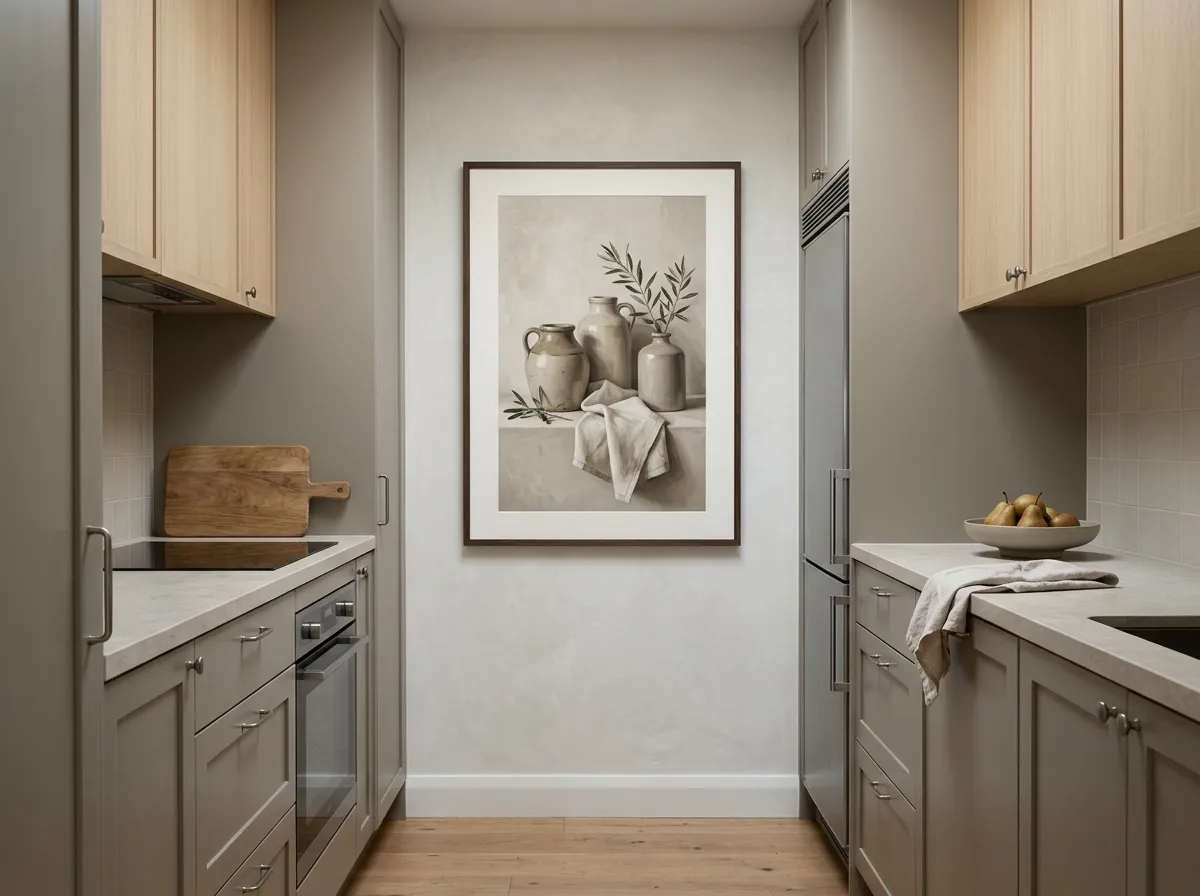
Small and galley kitchens have limited wall space, which makes a single, correctly scaled piece far more effective than an attempt to fit multiple pieces into a tight footprint. A narrow end wall, at the entrance or exit of the galley, is often the only genuinely available spot — and works well precisely because it’s viewed at close range while passing through.
High-contrast, compact kitchen wall art tends to suit small kitchens better than a softer, larger-scale piece would, since impact needs to come from a smaller footprint. This is one context where the close-range viewing distance actually works in the art’s favour rather than against it.
Which Interior Styles Suit Kitchen Wall Art
Kitchen wall art works across most kitchen styles, provided the placement and framing rules above are respected.
Organic modern — kitchen wall art with genuine texture or painterly brushwork complements the natural wood and stone this style favours.
Modern farmhouse and transitional — warm, approachable pieces like Botanical Meadow suit the welcoming, lived-in register these styles aim for.
Minimalist and Scandinavian — a single restrained, high-contrast piece suits the clean lines and negative space these kitchens prioritise.
Kitchen Wall Art Above Open Shelving and Counters
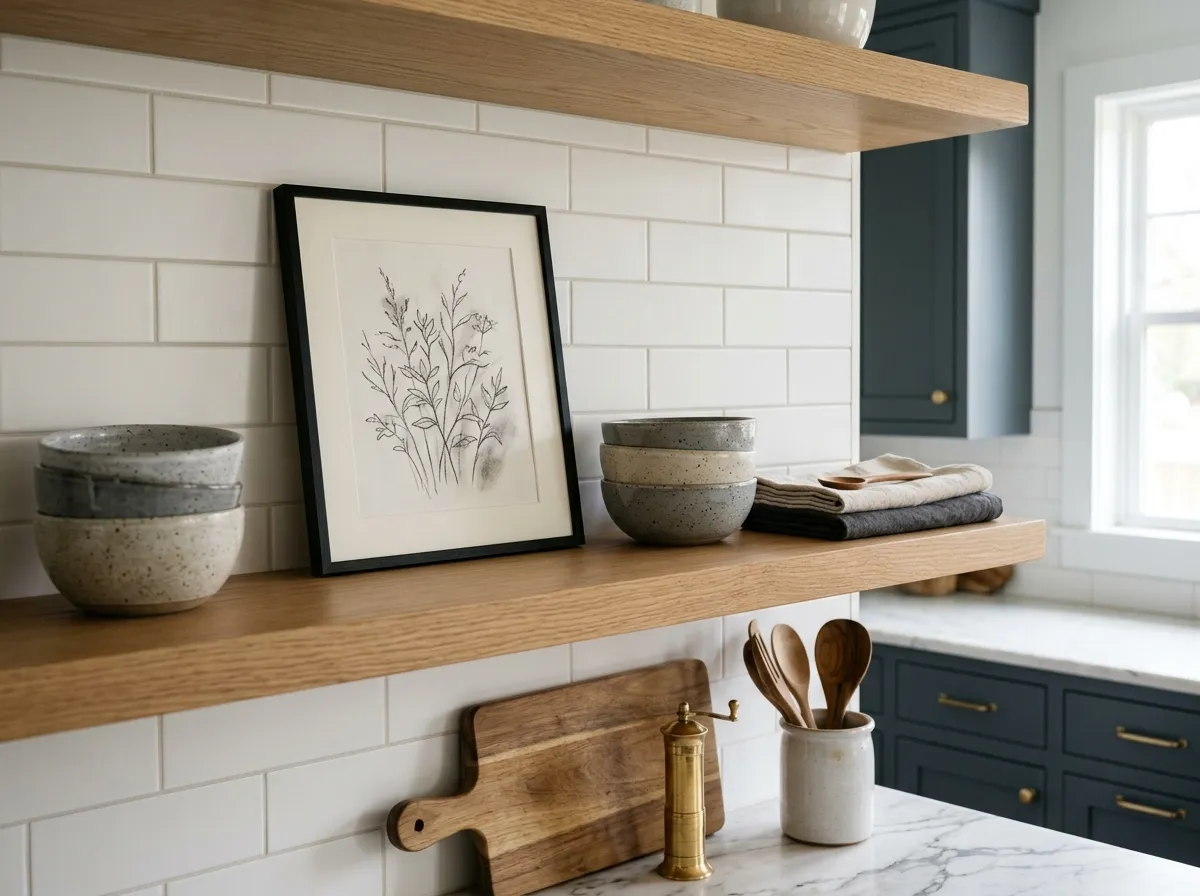
Open shelving offers a genuinely different way to display kitchen wall art — leaned rather than wall-mounted, styled alongside dishware and everyday objects as part of a considered vignette rather than hung as a standalone piece. This approach suits open shelving’s inherently more casual, curated-collection feel.
A leaned piece also sidesteps some of the placement anxiety around drilling into a kitchen wall — it can be easily repositioned or swapped, which particularly suits a rented kitchen or one where the styling is expected to evolve.
Scale and Placement for Kitchen Wall Art
Kitchen wall art generally works at a more modest scale than living or dining room pieces, given how much less uninterrupted wall space a typical kitchen has once cabinetry, appliances, and windows are accounted for. Standard files run up to the 24×36 inch full-quality ceiling, but few kitchen walls genuinely call for a piece that large outside an open-plan feature wall.
Hanging height follows the standard 57-inch centre-height convention where a wall isn’t tied to a specific piece of furniture below it, such as above a breakfast nook bench; for a piece above a counter or shelving, position it with enough clearance to avoid interfering with daily use of the surface below.
What to Avoid With Kitchen Wall Art
Hanging directly above the stove. Airborne grease settles as an invisible film long before it’s visible, and a stove-adjacent wall is rarely a safe long-term location regardless of framing quality.
Unsealed or non-wipeable framing. A frame that can’t be gently wiped down periodically will show its age in a working kitchen far faster than in any other room.
Oversizing for the available wall. Kitchens typically have less uninterrupted wall space than living or dining rooms — sizing for the wall’s actual dimensions matters more here than defaulting to a standard formula.
Ignoring daily workflow clearance. Kitchen wall art placed where it will be regularly brushed, bumped, or splashed during normal use will show wear far faster than a piece placed with real clearance in mind.
Choosing art before cabinetry and countertops are finalised. These are far more expensive and disruptive to change later than a piece of kitchen wall art.
Kitchen Wall Art by Kitchen Type — Complete Styling Guide
The table below maps common kitchen layouts to sizing, technique, and placement guidance for kitchen wall art.
| Kitchen Type | Sizing Approach | Best Technique | Placement Note |
|---|---|---|---|
| Breakfast nook / eat-in | Small to medium | Botanical Meadow | Beside table, away from stove |
| Open-plan kitchen | Large statement piece | Muted Canvas | Feature wall visible from both zones |
| Small / galley kitchen | Small, high contrast | Silver Grain Film | Narrow end wall, close-range viewing |
| Open shelving | Small, leaned not hung | Carbon Sketch | Styled vignette with dishware |
Recommended Products for Kitchen Wall Art
Everything you need to frame, light, and install kitchen wall art so it survives the room’s daily use.
- Browse our complete Wall Art Ideas guide for every space
- See our Bathroom Wall Art guide for the other high-humidity room in the home
- Read our Botanical Wall Art for Warm Rooms guide for more on the breakfast-nook-friendly technique
- See our Textured Wall Art guide for more on genuine dimensional texture in working spaces
Frequently Asked Questions
Kitchen Wall Art That Survives the Room It’s In
The kitchens where wall art works best share a consistent pattern: genuine distance from grease and steam, a wipeable, sealed frame rather than one that only looks protected, and scale that respects how limited most kitchen wall space actually is. None of this is complicated, but skipping any one of these is what separates kitchen wall art that lasts from a piece that quietly degrades within a year.
Whether it’s a warm piece beside a breakfast nook or a bold feature-wall statement in an open-plan layout, the same logic holds throughout. Start with distance from the stove — get that right, and the framing and styling decisions become straightforward.
Shop All Prints →