Bathroom wall art has to do something most other rooms don’t ask of it: survive real humidity while still looking considered. Steam, moisture, and limited ventilation rule out a lot of what works effortlessly in a living room or bedroom, which is exactly why bathrooms are so often left with a mirror and nothing else. This guide covers 11 proven rules for bathroom wall art across powder rooms, primary bathrooms, guest baths, and spa-style spaces — what actually protects a piece, and what just looks protected in a product photo.
The bathroom has quietly become one of the most design-forward rooms in the home. Bathrooms are being reimagined as restorative, wellness-centred spaces rather than purely functional ones, with the large majority of design professionals reporting the footprint of the room is growing to accommodate this shift — which makes bathroom wall art less of an afterthought and more of a genuine specification decision.
This guide walks through bathroom wall art by bathroom type, the humidity and framing choices that actually matter, and how to size a piece for a room that’s usually smaller and viewed from a closer range than anywhere else in the home.
Bathroom Wall Art for Powder Rooms
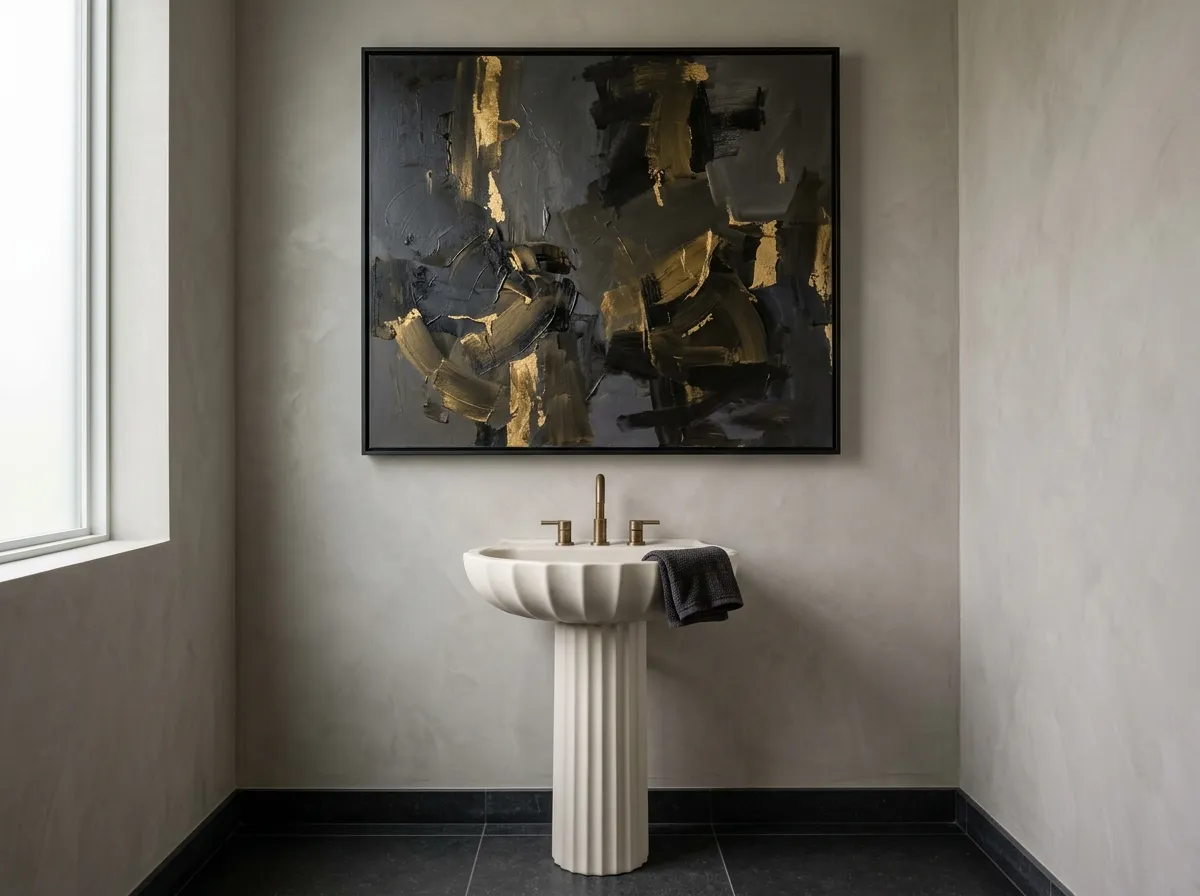
A powder room is one of the best places in the entire home for a genuinely bold piece of bathroom wall art — it’s a small, self-contained space seen mostly by guests for a brief moment, which makes it a low-risk place to try a statement piece that might feel like too much commitment elsewhere.
Because a powder room is typically viewed at close range and for a short visit, bathroom wall art here can afford to be more dramatic or unusual than the rest of the home’s more restrained choices, without needing to suit every family member’s daily taste the way a shared bathroom does.
Bathroom Wall Art for Primary and Ensuite Bathrooms
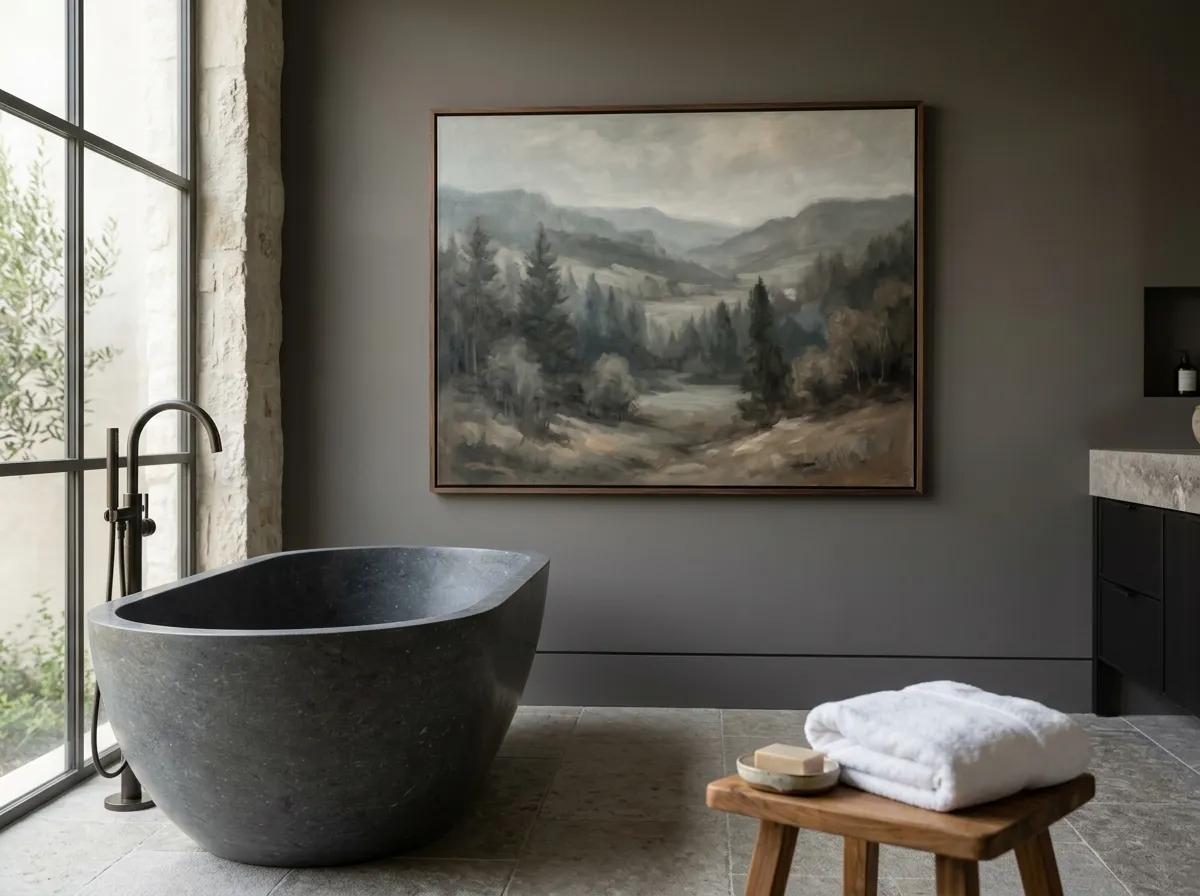
Primary and ensuite bathrooms have grown considerably in scope over the past few years, with the majority of bath professionals now reporting these rooms are being designed as genuine wellness spaces rather than purely functional ones — which makes a considered piece of bathroom wall art a natural extension of that shift rather than an unusual addition.
Because a primary bathroom is used daily and often for longer, unhurried stretches — a bath, an extended morning routine — bathroom wall art here benefits from the same calming, muted qualities that suit a bedroom, positioned on the driest wall available and well clear of the tub or shower spray zone.
Bathroom Wall Art for Guest Bathrooms
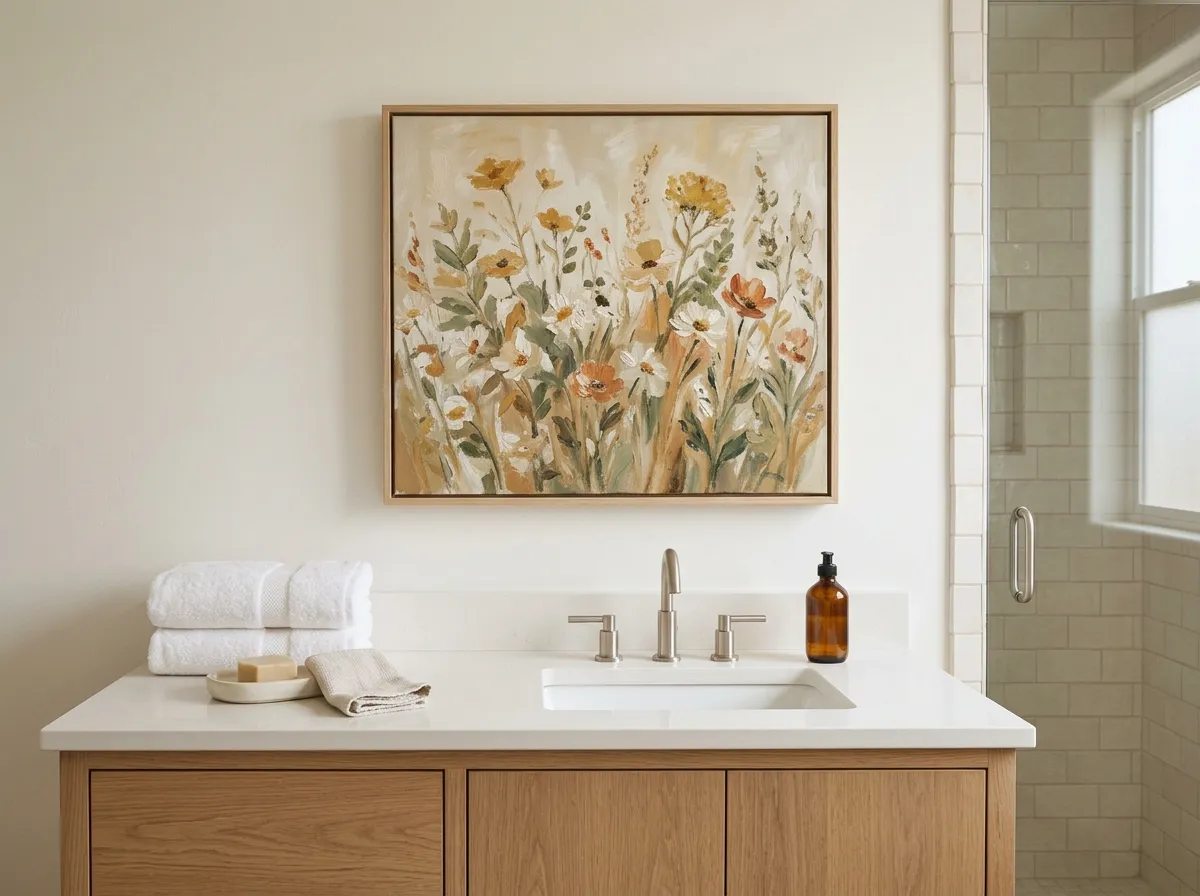
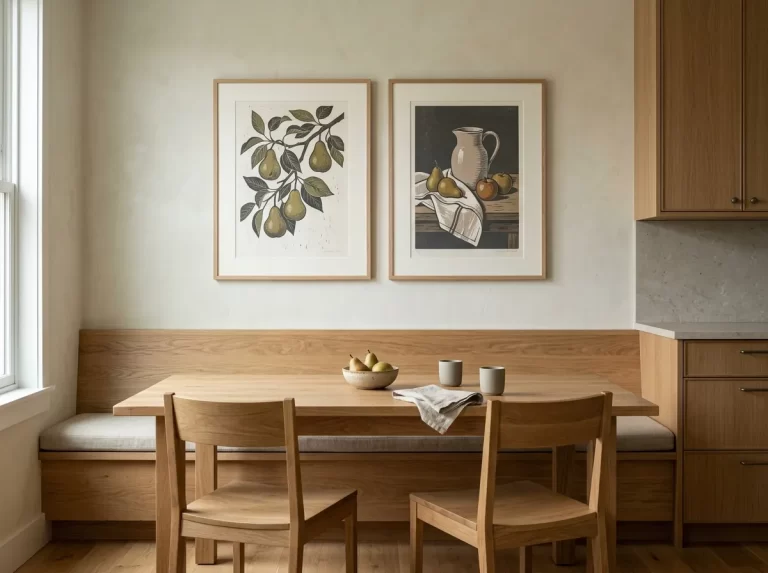
A guest bathroom benefits from bathroom wall art that reads as warm and welcoming to someone unfamiliar with the home, more than it needs to reflect a single household member’s specific taste. A warm, approachable piece — florals, gentle landscapes — tends to suit this role better than something highly personal or conceptually demanding.
Because a guest bathroom typically sees lighter, less frequent use than a primary bathroom, it’s also a reasonable place to be slightly less conservative about placement, provided the same core humidity and framing rules still apply.
Bathroom Wall Art for Spa-Style Bathrooms
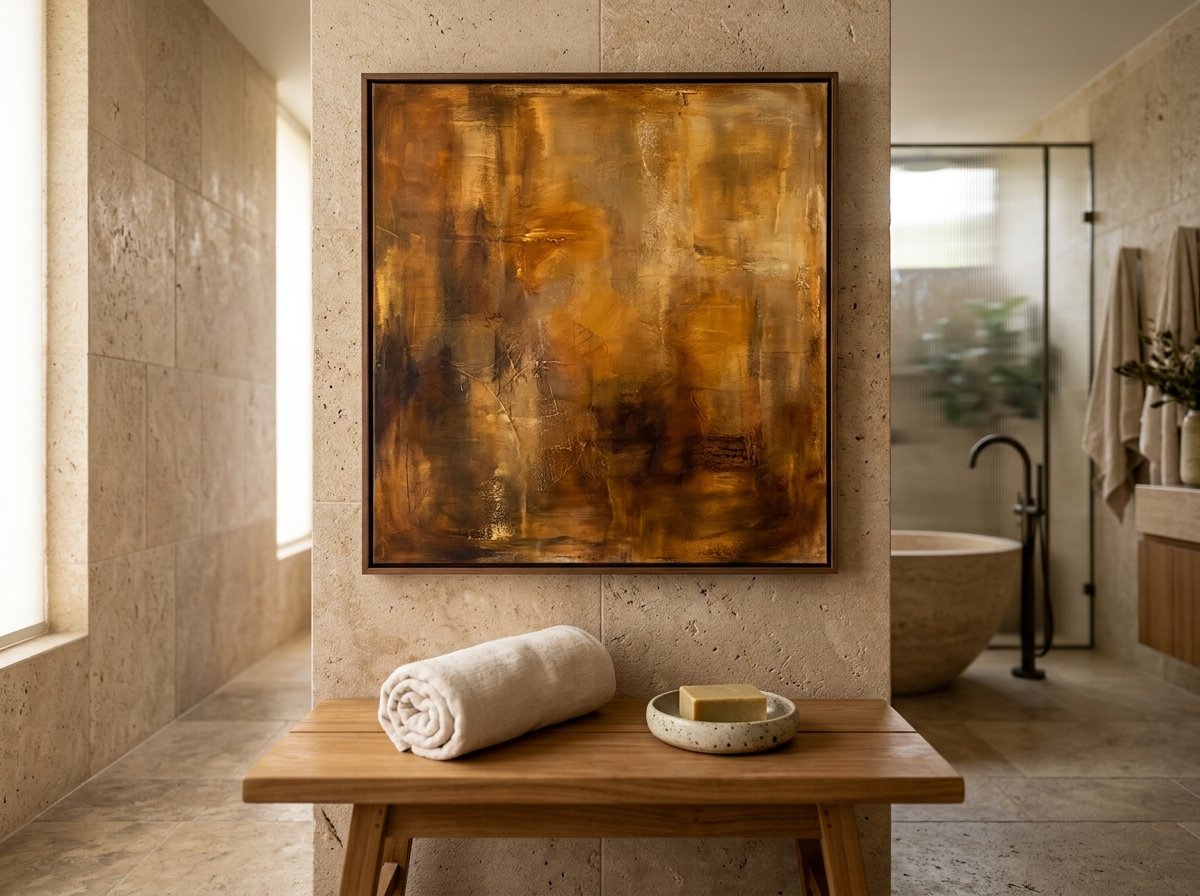
Spa-style bathrooms are built around exactly the kind of restorative, sensory experience that bathroom wall art can genuinely contribute to, rather than just decorate around — warm, richly toned pieces echo the natural stone and warm wood materials these bathrooms already favour.
Because spa-style bathrooms tend to run warmer in ambient temperature and humidity than a standard bathroom, framing and glazing choices matter even more here than elsewhere — this is not the room to cut corners on sealed glazing to save a small amount on framing cost.
Humidity and Moisture Protection That Actually Works
Genuine humidity protection for bathroom wall art comes down to three things: sealed glazing rather than open-backed framing, placement away from direct water and steam contact, and adequate ventilation in the room generally. Skipping any one of these significantly raises the risk of warping, mould, or paper degradation over time, regardless of how good the other two are.
Acrylic glazing is generally a safer choice than standard glass for bathroom wall art, both because it’s lighter and less likely to crack in a small, sometimes-slippery room, and because a well-sealed acrylic front creates a more genuinely airtight barrier around the print itself.
Choosing the Right Frame and Glazing for Bathroom Wall Art
A frame for bathroom wall art needs to do more structural work than a frame anywhere else in the home. Look for a fully sealed backing, rather than an open cardboard or foam-core back that lets humid air reach the print directly, and confirm the glazing itself is genuinely sealed at every edge, not just resting against the frame lip.
Wood frames generally hold up fine in a bathroom with reasonable ventilation, but a metal or engineered frame with a factory-sealed finish is a safer choice in a bathroom that runs consistently humid, since wood can warp slightly with repeated moisture exposure over years of use.
Which Technique Suits a Bathroom
Several MutedCanvas techniques suit bathroom wall art particularly well, largely because their existing palettes already echo materials common to bathroom design.
Muted Canvas — dark, cinematic, desaturated tones that pair naturally with stone and matte tile in a primary or spa-style bathroom.
Botanical Meadow — warm, impressionist florals well suited to a guest bathroom’s welcoming, approachable register.
Amber Varnish — warm honey-amber glaze tones that echo natural wood and brass fixtures in a spa-style bathroom.
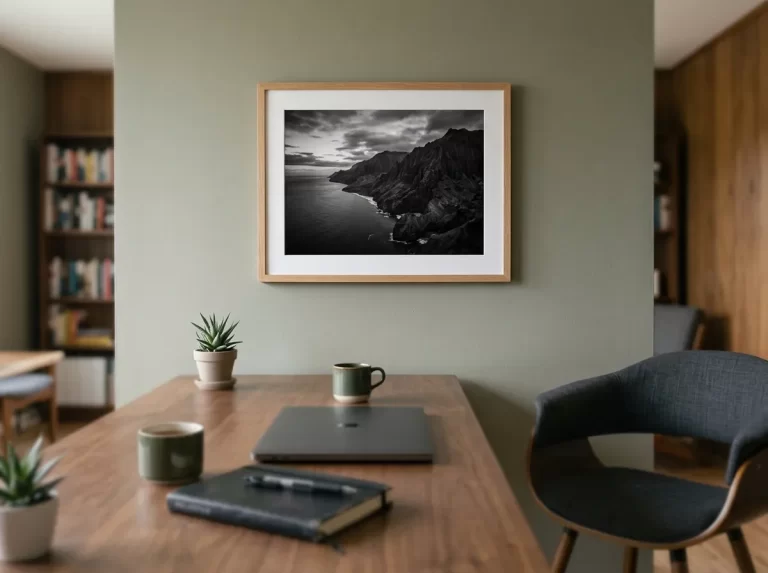
Silver Grain Film — high-contrast monochrome that suits a minimalist, design-forward powder room particularly well.
Scale for Small Bathroom Walls
Bathrooms are typically smaller and viewed at a closer range than almost any other room in the home, which changes the usual sizing formulas. A powder room or small guest bathroom often suits a more modest piece than the standard sofa- or headboard-width percentages used elsewhere, simply because the available wall space is smaller and the viewing distance shorter.
For a genuinely small bathroom, a single well-scaled piece consistently outperforms a multi-piece grouping, which can read as cluttered in a room with limited square footage. Standard files still run up to the 24×36 inch full-quality ceiling, but few bathroom walls actually call for that large a single piece.
Where Not to Hang Bathroom Wall Art
The single most important placement rule for bathroom wall art is distance from direct water contact — never directly above a tub, inside a shower enclosure, or on a wall that regularly gets splashed during normal use, regardless of how well-sealed the framing is.
Walls directly beside a sink also deserve caution, since splash from hand-washing is more frequent and closer-range than people often expect. The safest walls for bathroom wall art are typically the ones perpendicular to or furthest from the primary water source in the room.
Pairing Bathroom Wall Art With Tile and Fixtures
Bathroom wall art reads most cohesively when it’s chosen against the room’s tile and fixture tones, since these are the largest fixed surfaces in a bathroom and the hardest to change later. A piece with undertones that echo the existing tile — warm against warm stone, cool against cool marble — integrates far more naturally than one chosen in isolation.
Metal fixture finishes matter too: brass and warm brushed gold pair naturally with warmer-toned bathroom wall art, while chrome and brushed nickel suit cooler, more neutral pieces better.
What to Avoid With Bathroom Wall Art
Open-backed or unsealed framing. A frame without genuinely sealed glazing and backing is the single most common reason bathroom wall art degrades faster than expected.
Placement in a direct splash or steam zone. Even well-sealed framing has limits — proximity to water is still the primary risk factor, not just a secondary concern.
Oversizing for a small room. A piece scaled for a living room can overwhelm a bathroom’s limited wall space and closer viewing distance.
Ignoring ventilation. Hanging bathroom wall art in a room with no extractor fan or window undermines even excellent framing choices.
Choosing art before tile and fixtures are finalised. Since tile is far more costly to change, bathroom wall art should generally follow those decisions rather than lead them.
Bathroom Wall Art by Bathroom Type — Complete Styling Guide
The table below maps common bathroom types to sizing, technique, and placement guidance for bathroom wall art.
| Bathroom Type | Sizing Approach | Best Technique | Placement Note |
|---|---|---|---|
| Powder room | Small to medium, bold statement | Gilt Edge Canvas or Silver Grain Film | Close-range viewing, can be bolder |
| Primary / ensuite | Medium to large | Muted Canvas | Driest available wall, away from tub |
| Guest bathroom | Small to medium | Botanical Meadow | Warm, broadly welcoming subject |
| Spa-style bathroom | Medium to large | Amber Varnish | Furthest wall from steam source |
Recommended Products for Bathroom Wall Art
Everything you need to frame, protect, and install bathroom wall art so it actually survives the room it’s hung in.
- Browse our complete Wall Art Ideas guide for every space
- See our Bedroom Wall Art Ideas guide for the adjoining room in most primary suites
- Read our Botanical Wall Art for Warm Rooms guide for more on the guest-bathroom-friendly technique
- See our Gold Wall Art guide for bold powder room statement pieces
Frequently Asked Questions
Bathroom Wall Art That Survives the Room It’s In
The bathrooms where wall art works best share a consistent pattern: genuinely sealed framing rather than framing that only looks protected, placement on the driest available wall, and scale that respects how small and close-range most bathrooms actually are. None of this is complicated, but skipping any one of these is what separates bathroom wall art that lasts from a piece that quietly degrades within a year.
Whether it’s a bold statement in a powder room or a calm, considered piece beside a primary bathroom tub, the same logic holds throughout. Start with the frame seal and the wall’s moisture exposure — get those two right, and the styling decisions become easy.
Shop All Prints →