Wall art for restaurants and cafes is not decoration — it is environment. The art on your walls shapes how long guests stay, how much they spend, and whether they photograph and share the space. This guide covers twelve picks organised by venue type and wall position, each grounded in real hospitality research rather than general decorating advice.
This is a companion piece to our broader Restaurant Wall Art guide, which covers concepts and styles across a dining room. This guide goes deeper by venue type — fine dining, cafe, bar, entrance — with the evidence behind each placement decision.
Recent industry surveys show 74% of diners use social media to decide where to eat, and the ambiance visible in those posts — including the art on the walls — directly influences that decision.
Why Wall Art for Restaurants and Cafes Directly Affects Revenue
The link between hospitality environment and spending behaviour is well documented. Research on restaurant atmospherics has found a significant influence on patrons’ dining satisfaction and behavioural intentions, including their willingness to pay more, and a 2025 study in PLOS One found that restaurant attributes leading to higher customer appreciation were directly linked to greater willingness to pay and stronger return intentions. Art is among the most immediately legible of those attributes — visible from every seat, constant throughout the visit, and photographable.
The social media dimension adds a revenue multiplier that earlier generations of restaurant design didn’t have to consider. Diners increasingly research restaurants on social media before booking, and the images they encounter — including user-generated photos shot in your space — shape that decision before a menu is ever opened. A wall with art worth photographing functions as unpaid marketing with every guest post.
Wall Art for Restaurants and Cafes: the Dining Room Feature Wall
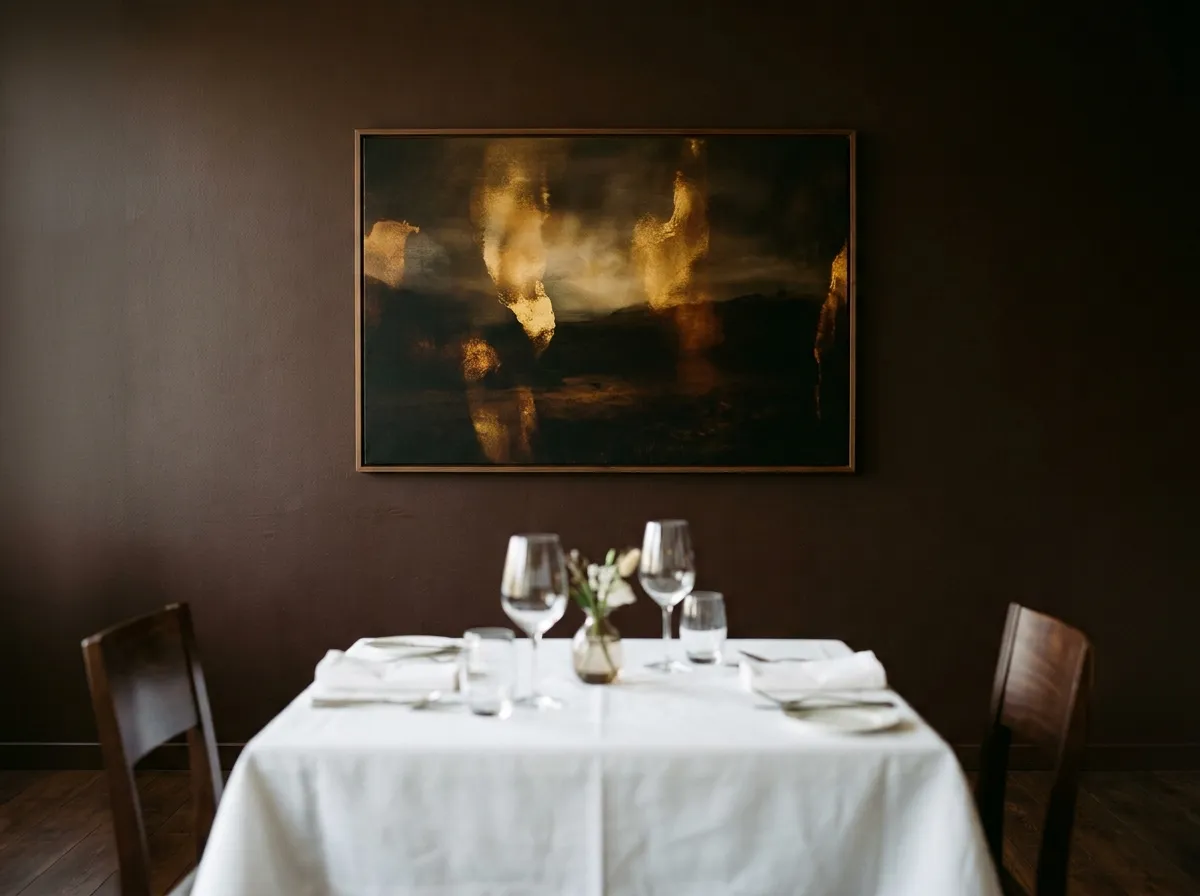
The dining room feature wall — typically the wall most visible from the entrance, or the wall facing the majority of diners — is the single highest-impact position for wall art for restaurants and cafes. It’s what guests see throughout the meal and what appears in the background of table photographs.
At dining room scale, wall art needs to read clearly from across the room — often 20–30 feet from the furthest table. A single 24×36 inch print, the largest single-panel size that maintains full print quality, still reads with presence at that distance when the composition is bold and the palette has strong tonal contrast. For a feature wall wider than one panel can cover, a triptych of three 24×36 inch (or smaller) panels in the same technique spans the width while staying within the quality ceiling for each individual print.
Fine Dining Wall Art — the Case for Restraint and Scale
Fine dining wall art has the most consistent visual language of any hospitality category: restraint, scale, and tonal depth. The art should communicate that the space takes itself seriously without competing with the food, the service, or the conversation — fewer pieces, darker palette, and significantly more empty wall space than in casual venues.
Under warm, dim, directional lighting typical of fine dining — usually 2700–3000K — high-contrast graphic art reads as harsh. Art with deep tonal range, long gradients from near-black through warm mid-tones, reads as rich and appropriate. A single cinematic landscape or wildlife study in deep shadow is the fine dining wall art choice that recedes under candlelight rather than competing with it.
Cafe and Coffee Shop Wall Art — Warmth That Keeps Guests Longer
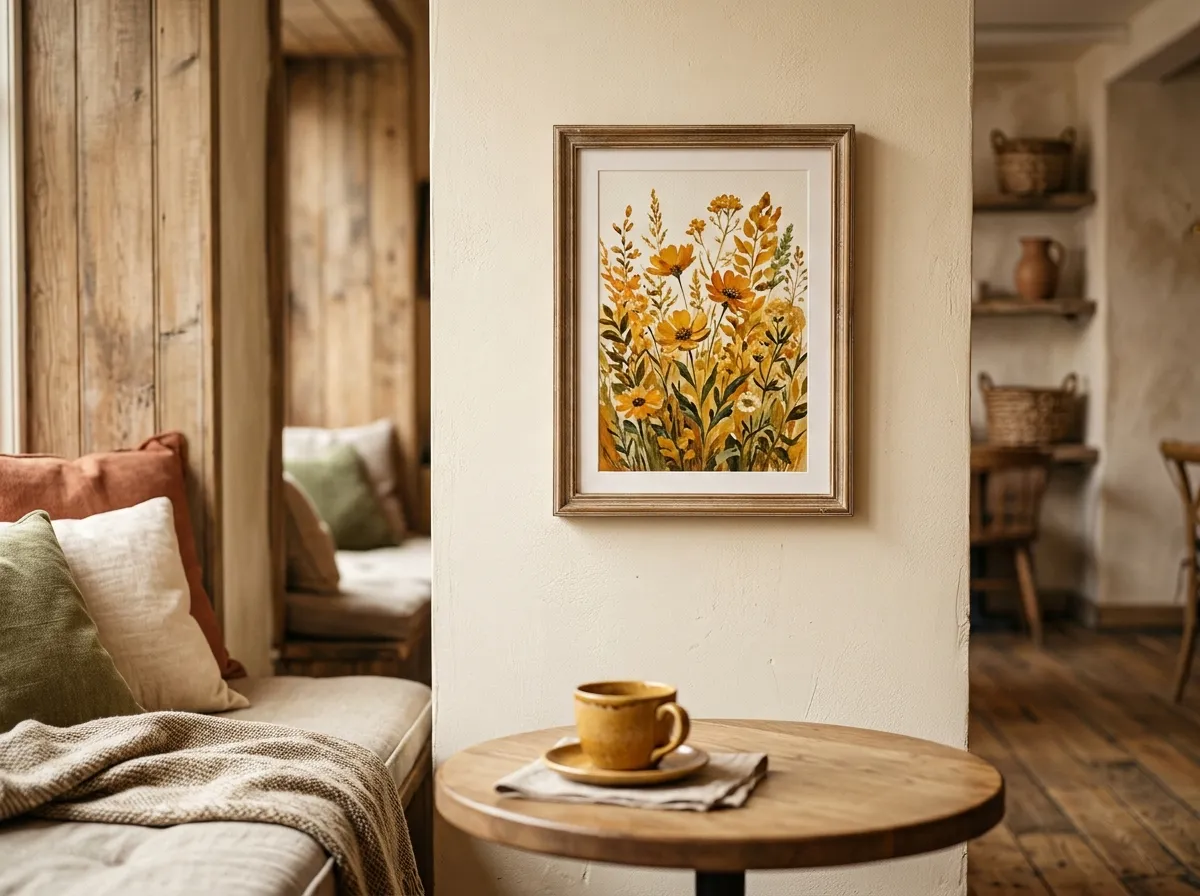
Wall art for restaurants and cafes in a coffee shop context operates in a different visual environment from restaurants — brighter lighting, a smaller and more intimate space, and guests who spend extended consecutive time in a fixed position, often working or reading. Art here needs to be rewarding over time without demanding active attention.
Botanical studies, tonal landscape prints, and ink-wash works with significant negative space serve extended dwell times best. Warm impressionist botanical prints — loose brushwork, warm ochre and amber, desaturated greens — read as organic and inviting under mixed natural and artificial daytime lighting.
The Instagrammable Wall — Wall Art for Restaurants and Cafes Designed for Sharing
A deliberately photogenic wall is now a standard consideration in new restaurant and cafe design — guests photograph and share these walls, generating consistent organic reach no paid advertising can replicate at the same cost.
The most effective photo-ready wall art for restaurants and cafes is not the loudest or most colourful — it’s the most compositionally satisfying from the distance guests typically photograph themselves, roughly 5–7 feet with a smartphone. At that distance, a single large-format print with strong visual structure photographs more successfully than a gallery wall of smaller pieces, which loses resolution at that range.
Bar and Cocktail Bar Wall Art — Drama at Close Viewing Distance
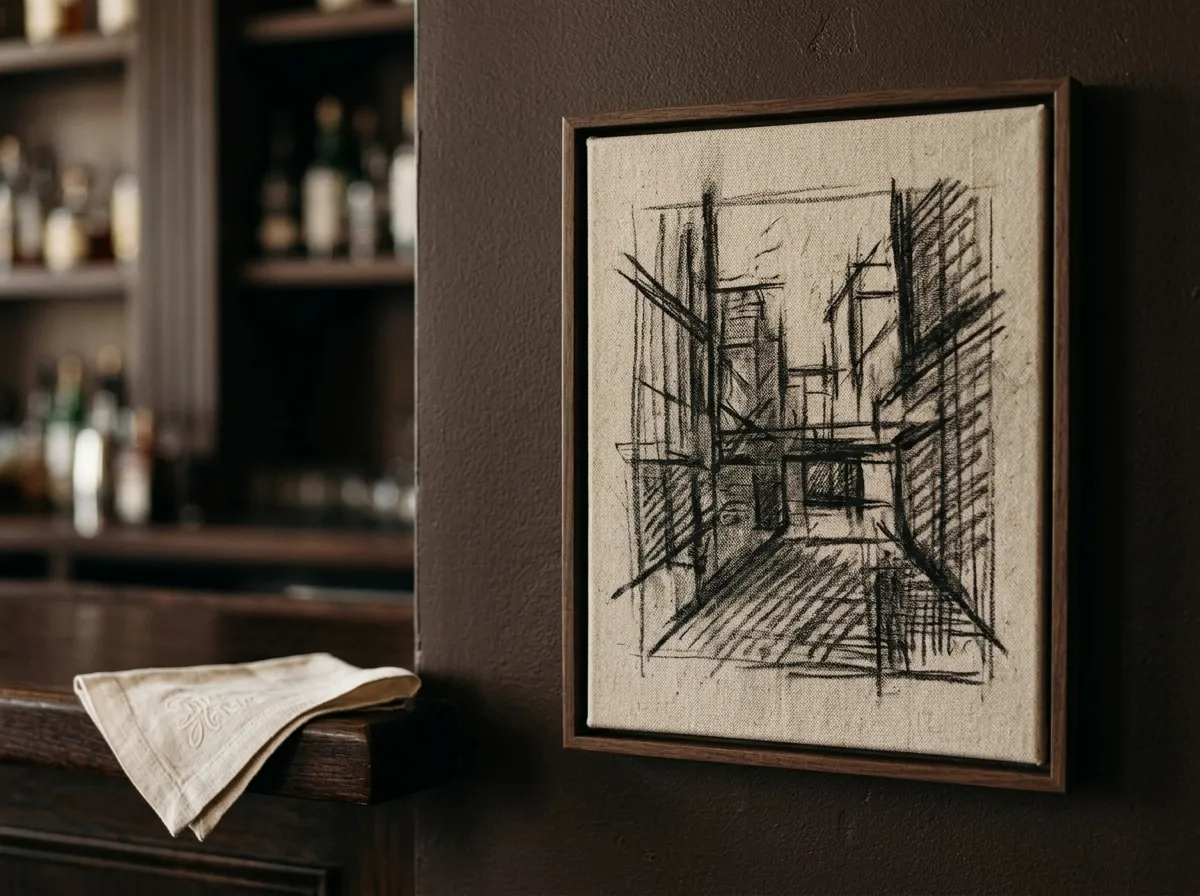
Bar environments have different requirements from dining rooms because the viewing distance is shorter — guests at a bar typically sit 2–5 feet from the back-bar wall — and lighting is more dramatic, often with directional spotlights or candles. Wall art that works at dining room distance requires different calibration at bar proximity.
At short viewing distance, technique quality becomes legible in a way longer dining room distances don’t allow. A textured charcoal-style print at 24×32 inches, hung at eye level behind a bar or in a bar alcove, reveals paper grain and drawn edges that read as handmade quality up close — a tactile impression that communicates craft, the same signal a well-made cocktail communicates.
Restaurant Entrance Wall Art — the Five-Second Impression
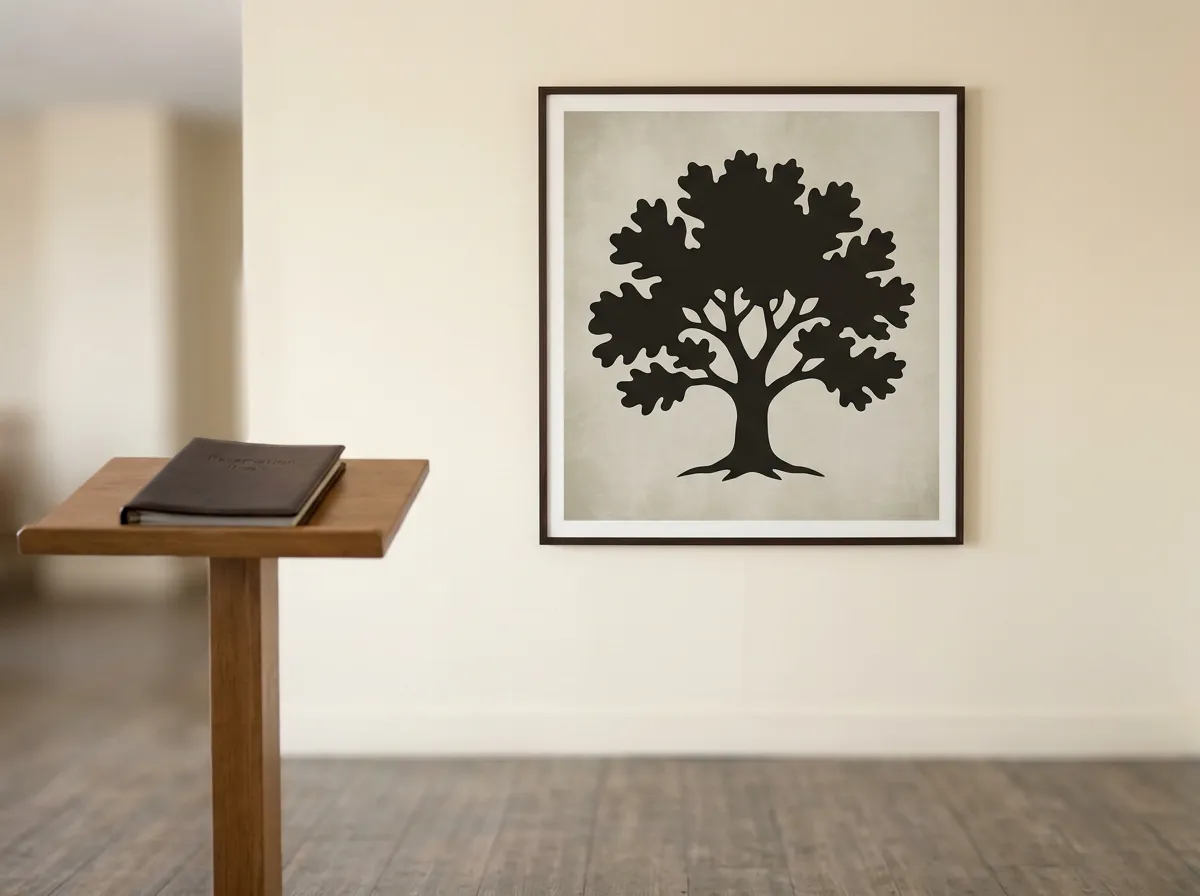
The entrance delivers the first impression that frames all subsequent judgements. A guest who perceives visual quality on entry is calibrated to notice and appreciate quality throughout the meal; a guest who perceives indifference is calibrated for the opposite.
Entrance wall art needs immediate presence — readable from the doorway, communicating the venue’s aesthetic register before a table is offered. This means a single dominant subject with clear compositional structure rather than a complex arrangement that requires close reading to understand.
Wall Art for Restaurants and Cafes Under Artificial Light
Most wall art for restaurants and cafes is chosen in daylight or showroom conditions, then hung where it’s experienced almost exclusively under warm artificial light at low to medium intensity. That shift significantly changes how art reads, and decisions made in daylight often disappoint under service lighting.
Under warm (2700K) artificial lighting, pale or pastel art washes out. Cool-toned art — blues, greys, cool whites — reads as cold and clinical rather than refreshing. What consistently performs well: dark-field prints with strong tonal contrast, warm-toned botanical and impressionist work, and tonal monochrome with long gradients rather than high contrast.
Which Technique Suits Which Restaurant and Cafe Context
Muted Canvas — the most versatile choice. Dark, cinematic, and desaturated, it reads with depth from any distance under any warm artificial light. Works in fine dining, mid-market, and bar contexts without adjustment.
Gilt Edge Canvas — the premium hospitality choice. Deep midnight tones with warm gold-accented edges respond to directional light with subtle animation through the evening. Best for fine dining, cocktail bars, and boutique hotel restaurants.
Botanical Meadow — the optimal cafe and daytime dining choice. Warm impressionist tones work well under mixed natural and artificial light, creating organic warmth that reads as inviting.
Silver Grain Film — strong for urban casual dining, modern cafes, and design-led venues. Works best where the overall palette is cool or neutral.
What to Avoid in Wall Art for Restaurants and Cafes
Art too small for the viewing distance. The most common failure is choosing prints at residential scale for commercial spaces. Scale up — dining rooms need art with enough presence to register at 20+ feet.
Text, quotes, and typographic art. Motivational quotes and chalkboard-style prints demand active reading rather than passive visual engagement — the wrong kind of attention during a meal, and they date quickly.
Mass-market food illustration. Generic illustrated lemons, coffee cups, or recipe-style prints signal a specific (low) level of design ambition to the guests most likely to post, review, and return.
Gallery walls in dining rooms. Multiple small prints require sustained close attention guests aren’t giving the walls during a meal. Gallery walls work in cafes where guests dwell; in a busy dining room, they read as noise.
Sizing Wall Art for Restaurants and Cafes at Social Distance
Sizing correctly requires accounting for viewing distance — the gap between the art and the furthest guest who’ll view it during service. Residential sizing rules (the two-thirds furniture-width formula) don’t scale to hospitality contexts where the viewer may be 25–35 feet away.
Evaluate scale from the farthest viewing position in the room, not from arm’s length. For banquette walls, the primary viewing distance is shorter, but the cumulative visual impact across the wall’s length matters more — a consistent series of same-sized prints at consistent spacing and height creates rhythm that reads as designed.
Wall Art for Restaurants and Cafes by Venue Type
Different venue types attract different guest profiles, operate under different lighting, and call for different approaches. The table below maps common venue types to the techniques, sizes, and priority wall positions that tend to work best.
| Venue Type | Best Technique | Size Guidance | Priority Wall |
|---|---|---|---|
| Fine dining restaurant | Muted Canvas or Gilt Edge Canvas | 24×36″ single panel, or triptych for wider walls | Feature wall, entrance |
| Mid-market restaurant | Muted Canvas, Impasto Linen, or Botanical Meadow | 20×28″ feature, banquette series | Feature wall and banquette |
| Cafe / coffee shop | Botanical Meadow or Smoke & Ink Wash | 16×24″ per piece, warm palette | Alcove and window-seat walls |
| Cocktail bar / wine bar | Gilt Edge Canvas or textured pieces | 16×24″ — drama at close range | Back-bar wall and booth alcoves |
| Casual dining / brasserie | Botanical Meadow or Amber Varnish | 20×28″ feature, banquette series | Entrance and dining room feature |
| Boutique hotel restaurant | Gilt Edge Canvas or Muted Canvas | 24×36″ — brand-level statement | Entrance, feature wall, private dining |
| Fast casual / counter service | Silver Grain Film or Smoke & Ink Wash | 20″+ on key visible walls | Wall facing the ordering queue |
Recommended Products for Wall Art for Restaurants and Cafes
Everything you need to source, frame, print, and hang wall art built to perform under real service conditions.
Frequently Asked Questions
Wall Art for Restaurants and Cafes That Works as Hard as Everything Else
The art on a restaurant or cafe wall is not passive. It shapes the quality signal guests receive before they order, extends the time they stay, and influences what they photograph and share. These are commercial functions — as measurable as menu pricing or service training.
The choices that serve these functions are specific: large enough to register at social distance, warm enough to perform under artificial light, and restrained enough to read as considered rather than accumulated. Start with the feature wall. Get that one right, and the rest of the venue follows the same logic.
Shop Wall Art for Restaurants and Cafes →