Restaurant wall art is one of the few design choices that shapes both how long a guest stays and how much they remember about the meal afterward. Before the food arrives, the walls have already told guests what kind of evening they’re having.
Good restaurant wall art does three jobs at once: it sets the mood before the first course, it reinforces the brand without a single logo, and it gives guests something worth photographing and sharing. Get it wrong, and even a great menu ends up in a forgettable room.
This guide covers twelve practical restaurant wall art concepts, how to match them to the kind of dining experience you’re running, what they typically cost, and the placement habits that make the art work with your lighting instead of against it.
One Statement Wall Behind the Bar or Open Kitchen
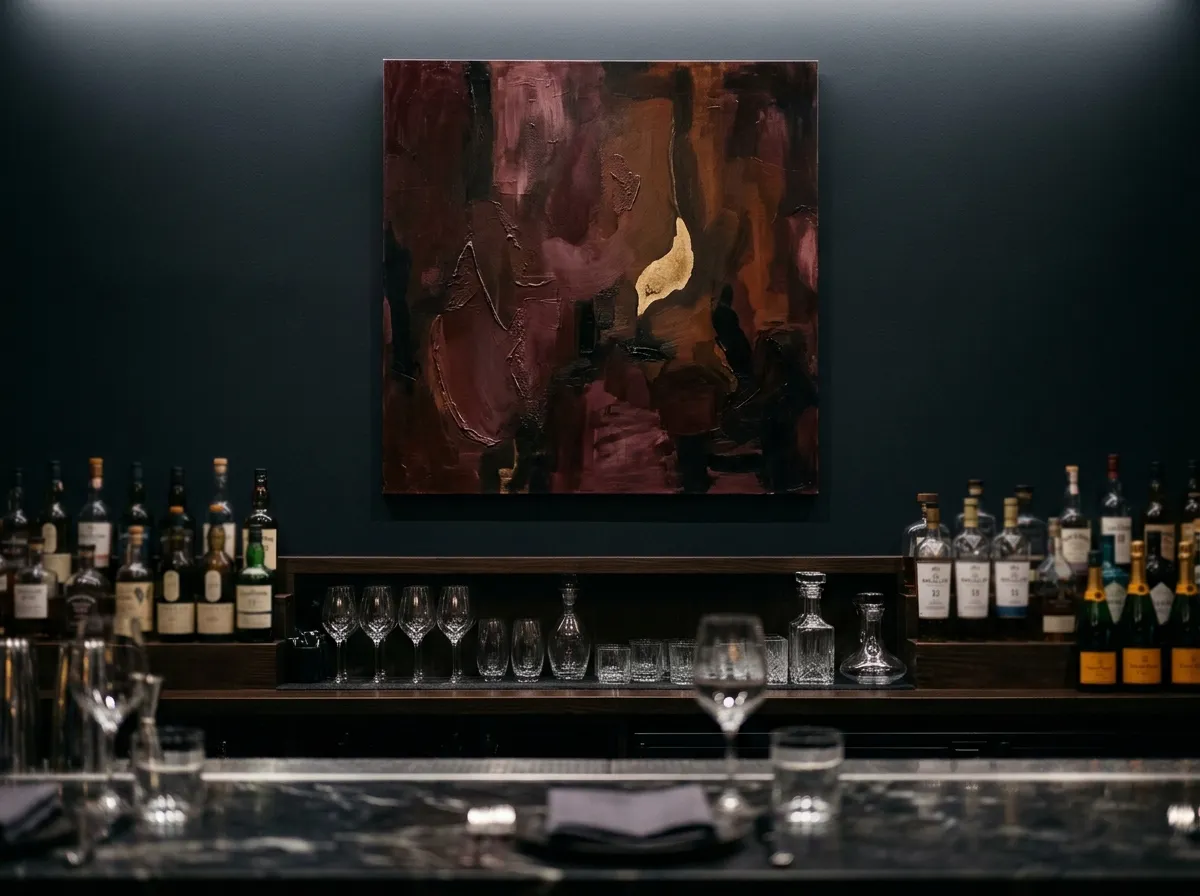
Most dining rooms do best with one confident “lead wall” — usually behind the bar or facing the entrance, the wall every guest sees whether they’re seated near it or not. Statement walls act as visual anchors that give guests something to admire and photograph, which is exactly the job restaurant wall art needs to do in this spot.
Match the width of the piece to roughly the width of the bar or banquette below it, and keep the rest of the room simpler by comparison so this one wall keeps its impact.
Moody Abstract Art for Evening Dining Atmosphere
For dinner-focused restaurants, deep, saturated restaurant wall art — wine, charcoal, forest green, black — sets an intimate tone before a single dish arrives. Cooler tones tend to have a calming, unhurried effect, while warmer reds and oranges create a cozier, more energetic feeling — worth deciding on deliberately rather than by accident.
Keep the palette to two or three tones maximum. A moody room reads as sophisticated; a cluttered, multi-toned one just reads as dark.
Farm-to-Table Botanical Art
For restaurants built around seasonal or local ingredients, botanical illustrations of the produce actually on the menu make the concept visible before guests read a word of it. This kind of restaurant wall art works especially well near the host stand or open kitchen, where guests already have a moment to look around.
Choose illustrations of ingredients specific to the region and season rather than generic stock florals — it reinforces the “farm-to-table” story instead of just decorating around it.
Black & White Photography for Classic Bistro Charm
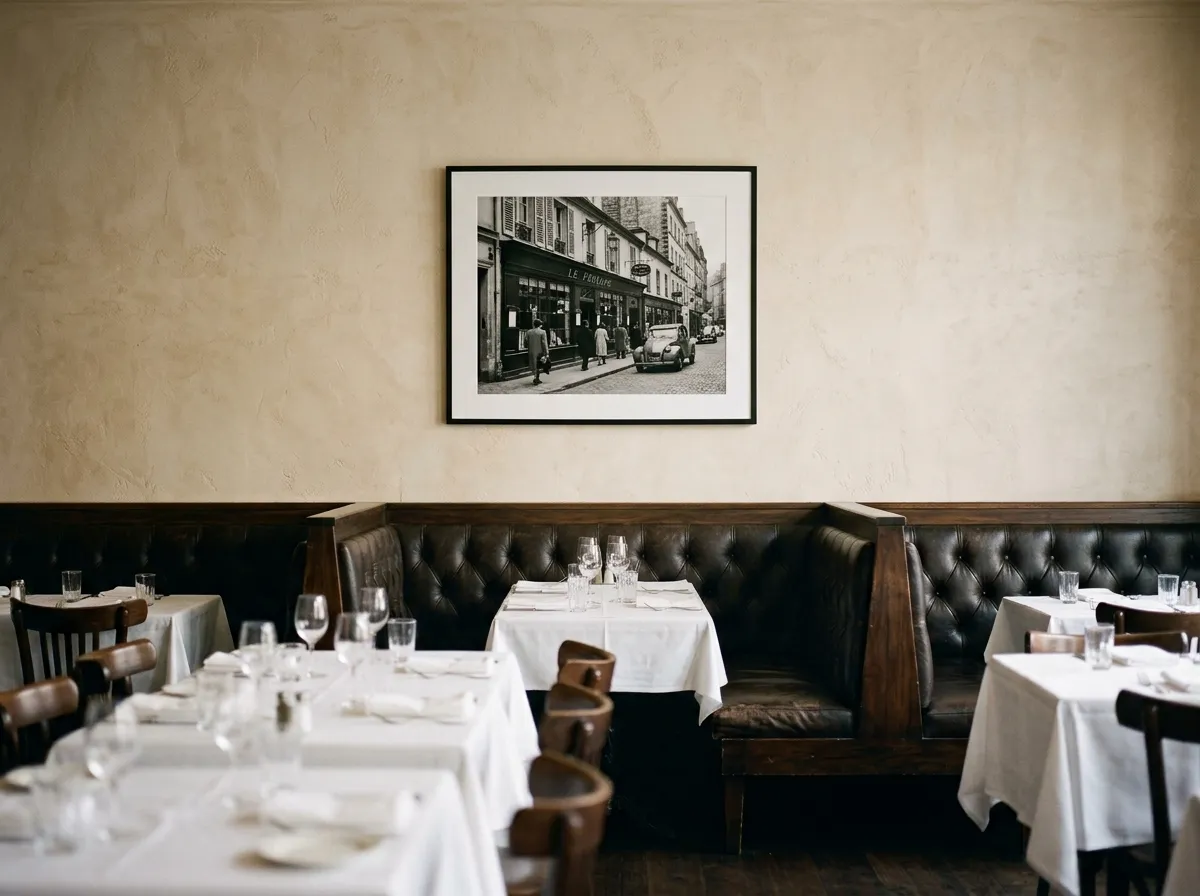
Black-and-white photography is one of the most dependable categories of restaurant wall art — it suits almost any cuisine, doesn’t compete with the food styling, and gives a room an immediate sense of history even in a brand-new space.
It’s a natural fit for bistros, wine bars, and classic brasserie-style concepts where the goal is warmth and familiarity rather than novelty.
Bold Typography for Casual, Fast-Casual Concepts
A single bold, well-designed typographic piece — a playful phrase, a menu highlight, the restaurant’s name treated as art — gives a casual or fast-casual concept personality without needing a big art budget. This style of restaurant wall art photographs well and travels easily across a multi-location brand.
Use it once, as the room’s clear focal point, rather than scattering smaller text pieces throughout — one confident line does more than five quiet ones.
Framed Vintage Ephemera for Heritage Restaurants
For restaurants leaning into a sense of history — old-world Italian, classic steakhouses, family-run establishments — a single framed piece of vintage ephemera (an old menu, a historic photograph, a hand-drawn map) gives the room a built-in story. This is restaurant wall art that does double duty as a conversation piece.
Keep it to one or two pieces maximum. A wall covered edge to edge in memorabilia reads as clutter rather than heritage.
Textured Art for Tactile, Upscale Dining Rooms
For fine dining and upscale concepts, textured, mixed-media restaurant wall art adds a layer of sensory richness that a flat print can’t match. Sculptural or three-dimensional pieces add depth and physical presence to a room, enhancing the overall sensory experience — a fitting complement to a menu built around texture and craft.
Reserve it for the room’s single lead wall. Texture is a higher-budget choice, so it earns the most impact when it isn’t competing with other statement pieces nearby.
Neutral Line Art for Small Café Spaces
Small cafés and coffee shops rarely have a big wall to work with. Simple, neutral line art — a coffee plant, a pastry outline, a minimal figure — brings personality without demanding much visual space, which matters in a room where the counter and menu board are already doing most of the talking.
This is also some of the most affordable restaurant wall art available, useful for cafés furnishing multiple small locations at once.
Cultural & Regional Art for Authentic Cuisine Concepts
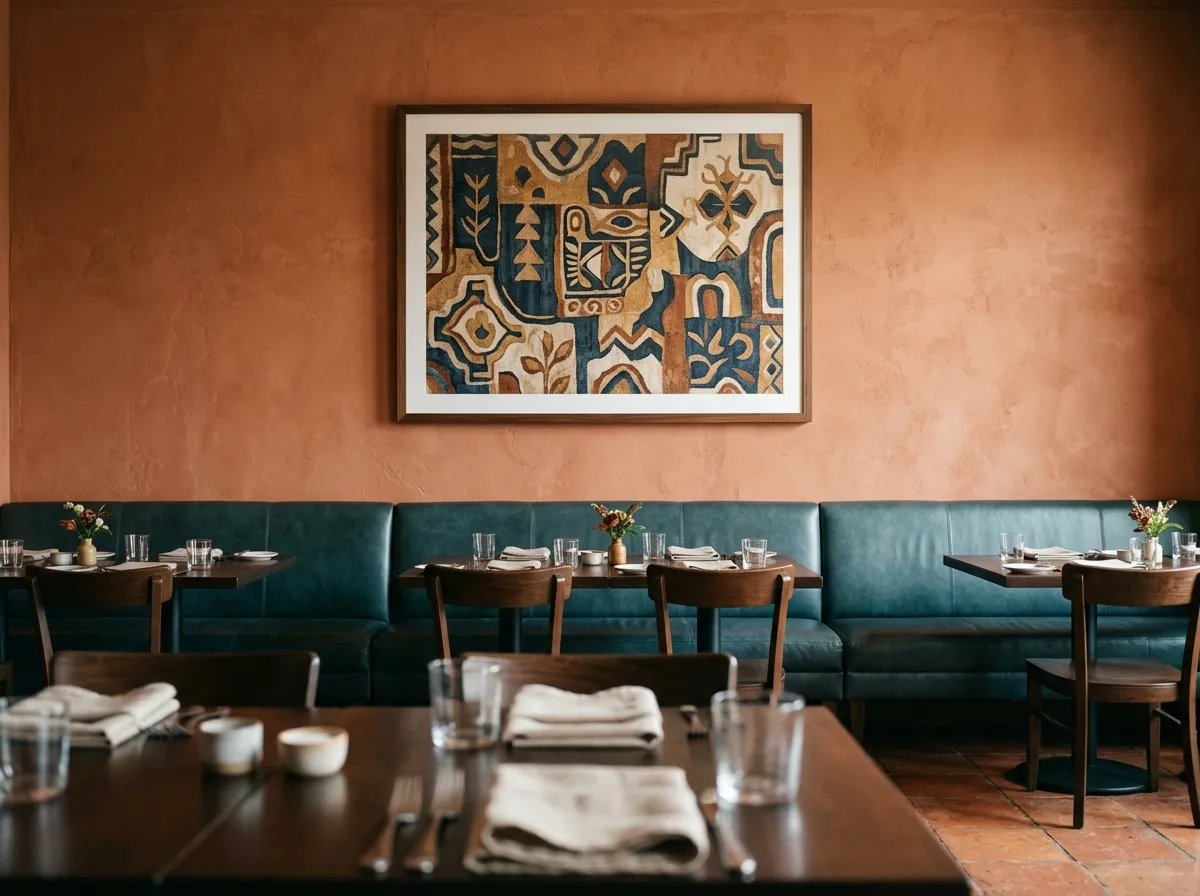
For restaurants built around a specific regional or cultural cuisine, restaurant wall art drawn from that culture’s textiles, ceramics, or pattern traditions signals authenticity far better than literal, clichéd imagery does.
Work with an artist connected to that culture where possible, and favour abstracted pattern and colour over on-the-nose imagery — it reads as considered rather than costume-like.
Rotating Local Artist Exhibits for Community Connection
Engaging local artists for murals or rotating exhibits is a widely recommended way to build a personal connection with a neighbourhood, and it keeps the room’s restaurant wall art genuinely fresh rather than static for years at a time.
This works particularly well for a secondary wall away from the main lead wall — a rotating spot near the entrance or the restrooms where regulars naturally look each visit.
Seasonal Menu-Inspired Art Refresh
Restaurants that change their menu seasonally can echo that shift in the dining room by rotating one piece of restaurant wall art alongside it — lighter tones and produce-led illustrations in spring and summer, deeper and richer pieces as the menu turns heartier in autumn and winter.
This doesn’t need to be a full redesign. Swapping a single piece near the entrance is enough to signal that the space, like the menu, is being actively cared for.
What to Avoid: Wall Art That Clashes With the Menu
A few restaurant wall art mistakes come up again and again: art that fights the food styling for attention, palettes that clash with the plating, and anything so literal (oversized photographs of the dishes themselves) that it reads as a menu board rather than art.
The simplest test: if a guest’s eye is drawn to the wall art instead of the plate in front of them at the wrong moment, the balance is off.
Restaurant Wall Art: Which Concept Fits Which Space?
Still deciding where to start? This table matches each restaurant wall art concept to the type of dining space it suits best, along with the typical mood and budget level.
| Concept | Best Restaurant Type | Mood | Budget Level |
|---|---|---|---|
| Statement Wall Behind Bar | Any full-service restaurant | Confident, moody | Medium–High |
| Moody Abstract Art | Dinner-focused, fine dining | Intimate, saturated | Medium |
| Farm-to-Table Botanical | Seasonal, farm-to-table | Fresh, authentic | Low–Medium |
| Black & White Photography | Bistro, wine bar | Classic, timeless | Low–Medium |
| Bold Typography | Fast-casual, multi-location | Playful, branded | Low |
| Vintage Ephemera | Heritage, family-run | Nostalgic, storied | Low–Medium |
| Textured Art | Fine dining, upscale | Sensory, refined | Medium–High |
| Neutral Line Art | Small café, coffee shop | Light, minimal | Low |
| Cultural & Regional Art | Authentic regional cuisine | Rooted, considered | Medium |
| Rotating Local Exhibits | Neighbourhood restaurants | Community-connected | Low |
| Seasonal Refresh | Menu-driven concepts | Fresh, current | Low |
Who Each Restaurant Wall Art Approach Suits
The right restaurant wall art depends heavily on the kind of dining experience you’re running and how long guests typically stay. These four starting points cover most concepts.
Moody abstract art or textured pieces on one confident lead wall. Fine dining restaurant wall art should feel deliberate and quiet rather than busy or novelty-driven.
Bold typography and bright, brand-forward pieces work best. Restaurant wall art here can afford to be playful and highly photographable.
Neutral line art and small-scale pieces suit compact spaces. Keep restaurant wall art simple so it doesn’t compete with the counter and menu board.
A statement wall behind the bar plus rotating local artist exhibits keeps the space feeling current for regulars who visit often.
Restaurant Wall Art: Placement & Photography
Even well-chosen restaurant wall art can underperform if it’s poorly lit or placed where the room’s ambient lighting works against it. A few consistent habits make a real difference.
Keep the centre of the piece at roughly 57 inches from the floor, and match its width to the bar, banquette, or table run below it so the composition reads as intentional rather than arbitrary.
Avoid hanging restaurant wall art directly opposite a bright window, where daytime glare can wash it out during lunch service even if it looks perfect for dinner.
Restaurant Wall Art Budget Guide
Budget depends heavily on the size of the lead wall and whether the piece is commissioned or sourced ready-made. Here’s roughly what to expect.
| Option | Typical Cost Range | Best For |
|---|---|---|
| Digital download + local print/frame | Lowest cost | Cafés, multi-location brands |
| Ready-made framed print | Low–Medium | Secondary walls, quick refresh |
| Large statement canvas | Medium–High | Lead wall behind bar or entrance |
| Rotating local artist exhibit | Low–Medium (often commission-based) | Community-focused restaurants |
| Commissioned mural or original piece | Highest | Flagship or destination locations |
For most independent restaurants, the most efficient approach is a mix: one higher-budget statement piece for the lead wall, and lower-cost restaurant wall art — digital downloads, local prints, or a rotating artist arrangement — for everywhere else.
Recommended Products for Restaurant Wall Art
Everything you need to source, frame, and hang restaurant wall art that survives spills, steam, and years of service.
Frequently Asked Questions
The Bottom Line
Restaurant wall art isn’t decoration on top of the dining experience — it’s part of it. The right piece sets the mood before the first course, reinforces what the restaurant is about without saying a word, and gives guests something worth remembering the room for.
Start with one wall. Get the lead wall right, and the rest of the room follows the same logic.
Shop Restaurant Wall Art →