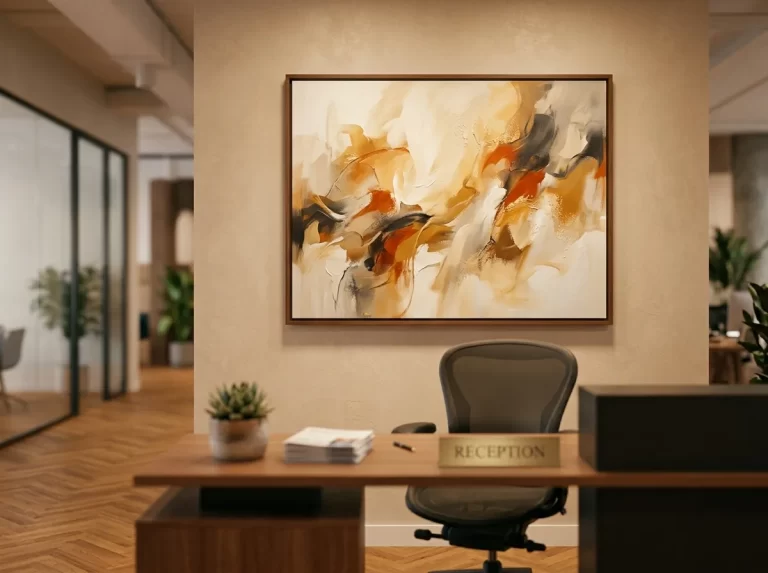
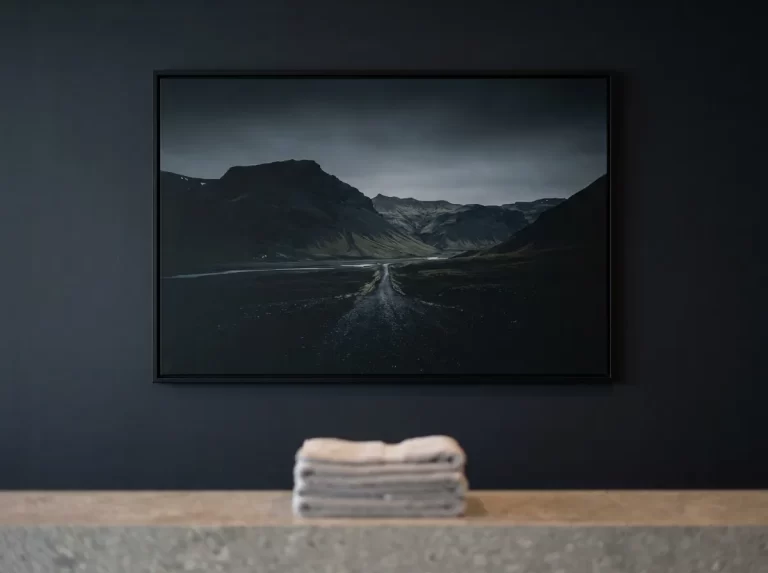
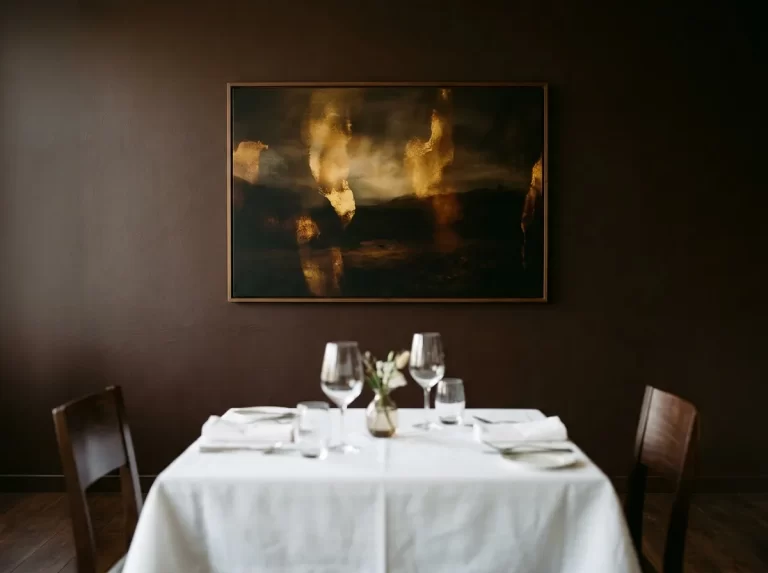
Interior design wall art is one of the last decisions in a project and one of the first things a client actually notices. Get the sourcing, scale, and specification right and it reads as the finishing touch the whole scheme was building toward. This guide covers 11 proven approaches to sourcing, presenting, and specifying interior design wall art across residential, commercial, and hospitality client work.
For designers, interior design wall art carries a different brief than it does for a homeowner shopping for themselves. It has to work within an approved palette, survive a client sign-off meeting, fit a line item in a proposal, and often be specified sight-unseen for a room the client hasn’t stood in yet.
This guide walks through interior design wall art by project type and by task — mood boards, budgeting, commercial versus residential briefs, trend alignment, and final specification — so it sits alongside a proposal rather than getting added as an afterthought once furniture and finishes are locked.
Interior Design Wall Art for Mood Boards and Concept Decks
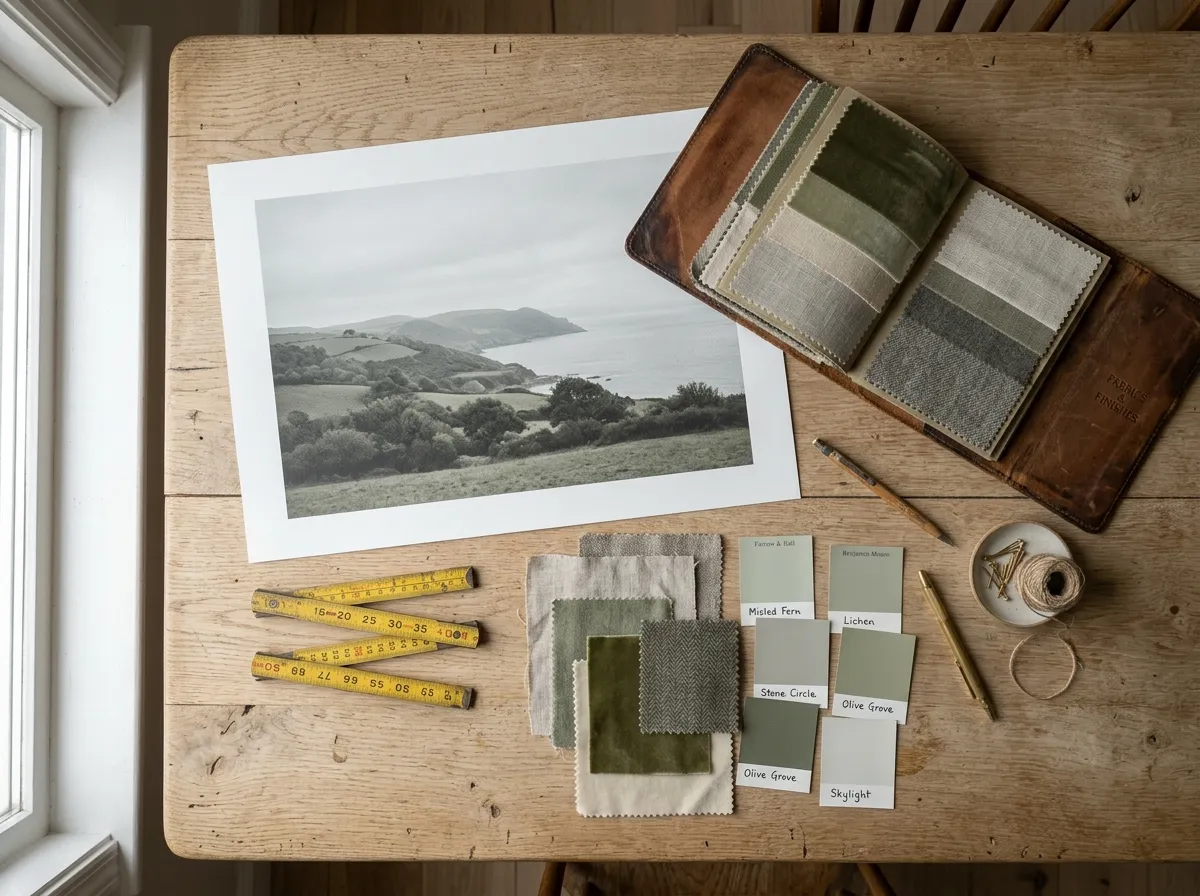
A mood board that shows fabric, paint, and furniture but leaves walls blank tells an incomplete visual story — clients are being asked to imagine the one element that most directly determines whether a room feels finished. Including a specific piece of interior design wall art, not a placeholder, gives the board the same authority as every other specified item.
For concept decks, present interior design wall art at actual proportion relative to the furniture around it, not as an isolated thumbnail. A print shown at the wrong relative scale on a mood board sets an expectation that doesn’t match the final installed result, which creates avoidable friction at the reveal. Where a client hasn’t yet committed to a specific piece, present two or three options within a single consistent technique rather than a scattershot of unrelated styles.
Interior Design Wall Art for Residential Client Projects
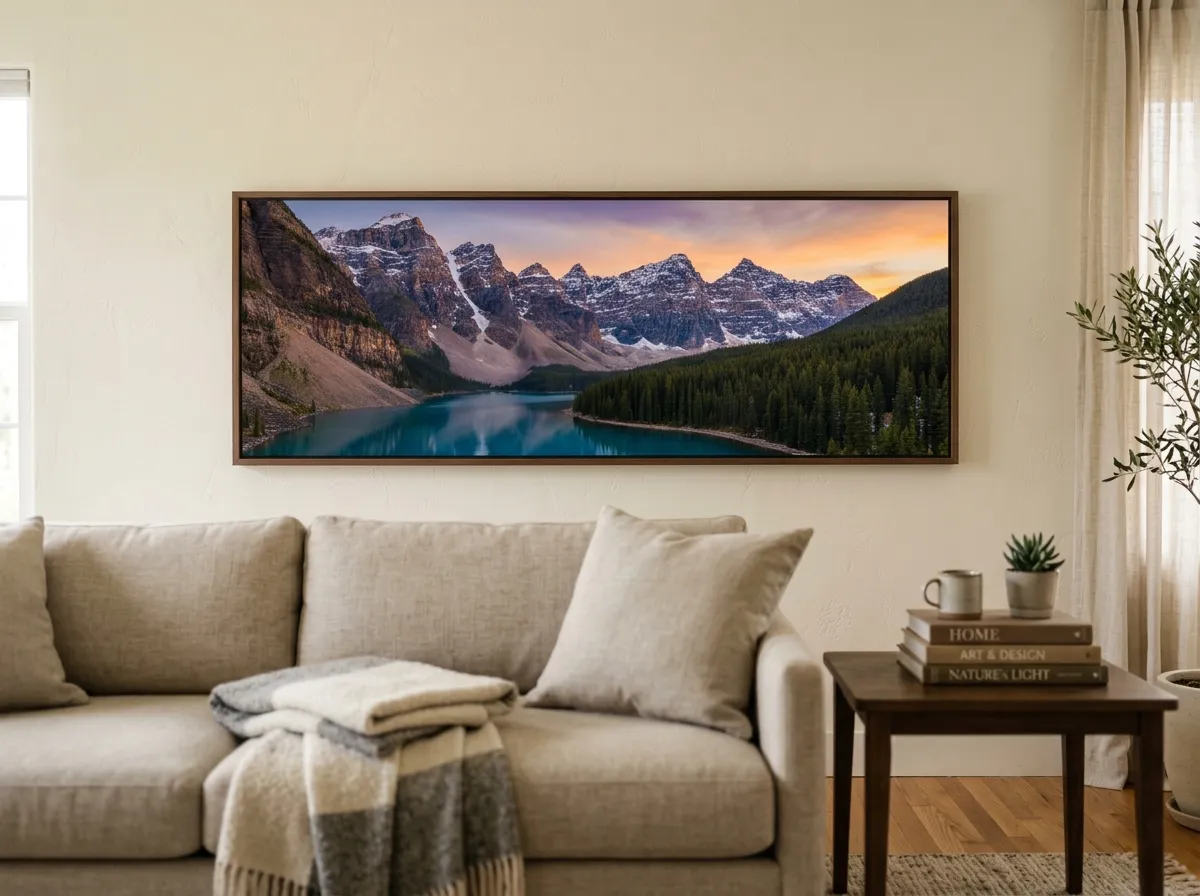
Residential clients generally want interior design wall art that feels personal without feeling generic — a brief that rewards technique-based sourcing over stock decor. A Muted Canvas landscape or a Botanical Meadow study reads as considered and specific in a way that a mass-market print from a big-box retailer does not, even at a comparable price point.
For residential living and dining spaces, interior design wall art should generally be specified after the sofa, rug, and primary finishes are locked, so the technique and tone can be chosen to complement rather than compete with the existing palette. In bedrooms, above-bed interior design wall art at 75–80% of headboard width remains the reliable sizing formula across almost every residential project.
Interior Design Wall Art for Commercial and Hospitality Clients
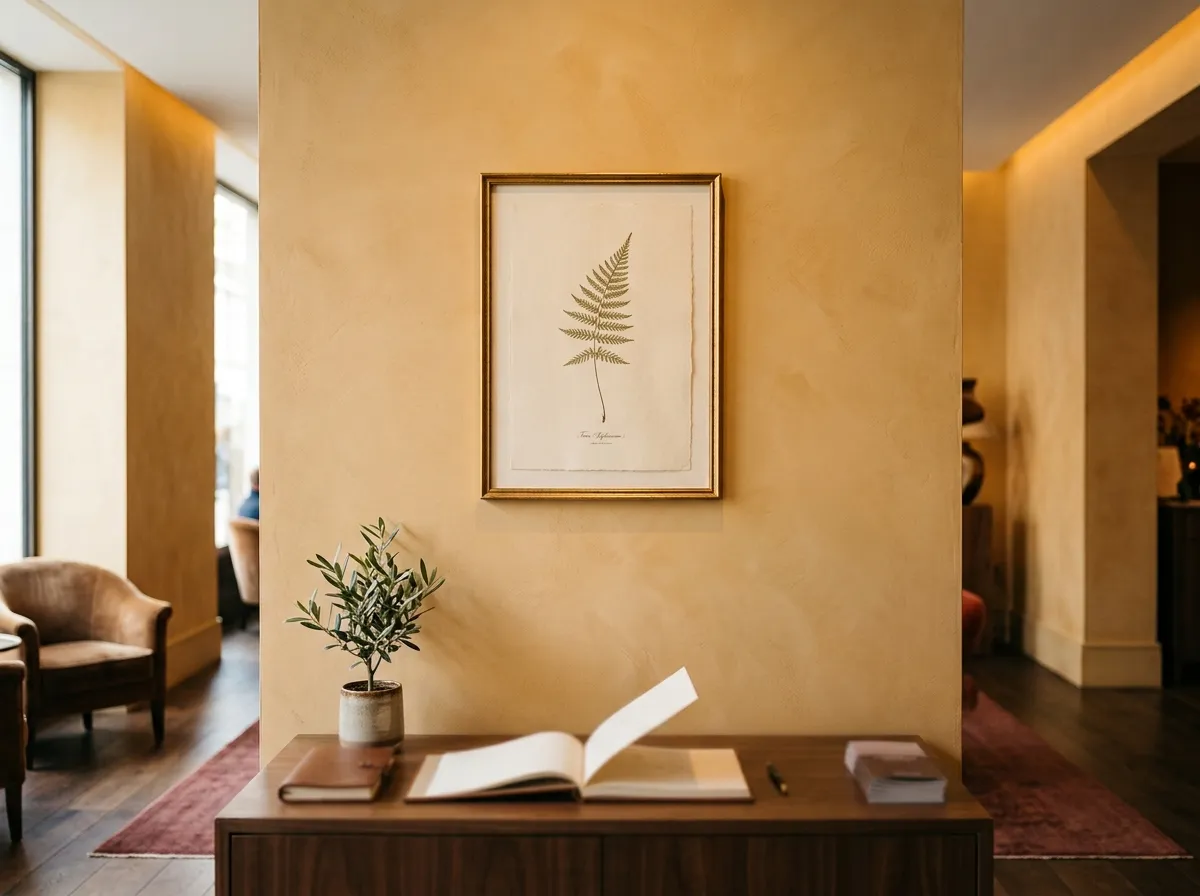
Commercial wall art carries a different brief from residential work: it needs to perform for a much wider audience, hold up under continuous public use, and communicate brand identity as clearly as any signage. Commercial interior design accounted for the largest share of industry revenue in 2025, driven substantially by workplace and hospitality fit-outs — precisely the segment where interior design wall art for clients is scaled across the largest number of walls.
For commercial clients, a single consistent technique applied across a whole floor or property reads as intentional brand design; a different print in every room reads as incidental decoration. Commercial clients also typically require interior design wall art specifications that survive handoff to a facilities or procurement team long after the designer’s engagement ends — clear file references, sizing, and frame specifications that a non-designer can execute correctly months or years later.
Sourcing Interior Design Wall Art at Scale Across Projects
Designers running multiple concurrent projects need interior design wall art that can be sourced quickly, specified precisely, and reprinted at need — a brief that digital download prints answer more reliably than one-off commissioned or vintage pieces. A file-based print can be resized for a different wall on a second project without a fresh sourcing search each time.
Building a working reference library of go-to interior design wall art across two or three techniques — the pieces a studio returns to for reception walls, above-bed positions, and feature walls — cuts sourcing time on every subsequent project without sacrificing the sense that each client’s scheme was chosen specifically for them.
Interior Design Wall Art and the 2026 Colour and Style Trends
Trend alignment matters for interior design wall art in a way it doesn’t for more permanent specifications like flooring or cabinetry — clients notice when a scheme feels dated faster in the art than anywhere else in the room. A recent survey of design professionals found maximalism (39%) and eclecticism (38%) are the most requested aesthetics for the year, with chocolate brown named the dominant colour by 33% of respondents.
For maximalist and eclectic briefs, interior design wall art works best in considered pairs or small groupings rather than the single-statement-piece approach that suits more minimal schemes. The rise of chocolate brown and other deep, warm tones plays directly to Gilt Edge Canvas and Amber Varnish, both developed with exactly this kind of warm, saturated palette in mind.
Budgeting Interior Design Wall Art Into a Client Proposal
Interior design wall art is one of the more budget-flexible line items in a proposal, which makes it useful for fine-tuning a total figure without touching furniture or finish selections the client has already emotionally committed to. Digital download prints keep this flexibility genuinely open — the same file can be printed at a smaller or larger size to hit a specific budget line without resourcing an entirely different piece.
When presenting interior design wall art costs, itemise the print, the framing, and the installation separately rather than a single bundled figure. Designers sourcing wall art regularly across multiple client projects should also account for trade pricing when budgeting: MutedCanvas’s Trade & Designer Programme offers 25% off every order with no minimum spend or annual fee, one-business-day approval, and a complimentary 30-minute consultation on orders of 10 or more prints — worth factoring into a proposal for any multi-room or multi-property engagement.
Matching Interior Design Wall Art to an Existing Palette
The most common specification failure is choosing interior design wall art in isolation from the finish schedule, rather than against it. A print selected purely on its own merits, without reference to the room’s dominant undertones, frequently clashes once installed even when the print itself is high quality.
The reliable method is to select interior design wall art against the room’s largest fixed surface — flooring, or the primary upholstery fabric — rather than against a secondary accent. For rooms with a fully neutral palette, interior design wall art becomes the primary colour statement in the space, which raises the stakes on getting the technique right — Gilt Edge Canvas or Amber Varnish for warmth, Silver Grain Film for a cooler, more editorial register.
Specifying Interior Design Wall Art for Client Sign-Off
A clean specification sheet is what separates interior design wall art that gets approved quickly from a choice that generates a round of unnecessary questions. At minimum, a specification should include the exact file or edition reference, finished print size, frame material and finish, and the intended wall position with dimensions.
For clients unfamiliar with reading technical specifications, pair the sheet with a simple rendered or photographed mockup showing the piece at scale on the actual wall. Wall art for clients should also include a brief rationale — one or two sentences on why this specific piece and scale were chosen for this specific wall.
Which Technique Suits Each Design Style
Each MutedCanvas technique maps cleanly onto a recognisable design vocabulary, which makes interior design wall art easier to talk through with clients who think in terms of style rather than technical specification.
Muted Canvas — the versatile, contemporary choice. Dark, cinematic, desaturated. Suits transitional and modern schemes across almost any residential or commercial brief.
Gilt Edge Canvas — the maximalist and warm-luxury choice. Deep tones with gold-accented detailing, well suited to the chocolate brown and deep-hue trends dominating 2026 briefs.
Silver Grain Film — the editorial, minimalist choice. High-contrast monochrome for design-led, contemporary, and Scandinavian-influenced schemes.
Smoke & Ink Wash — the Japandi and wabi-sabi choice. Atmospheric, tonally restrained, well matched to pared-back, meditative interiors.
Botanical Meadow — the warm, eclectic choice. Impressionist florals that suit maximalist and eclectic briefs, particularly grouped in pairs or trios.
Scale and Placement Rules Every Designer Should Know
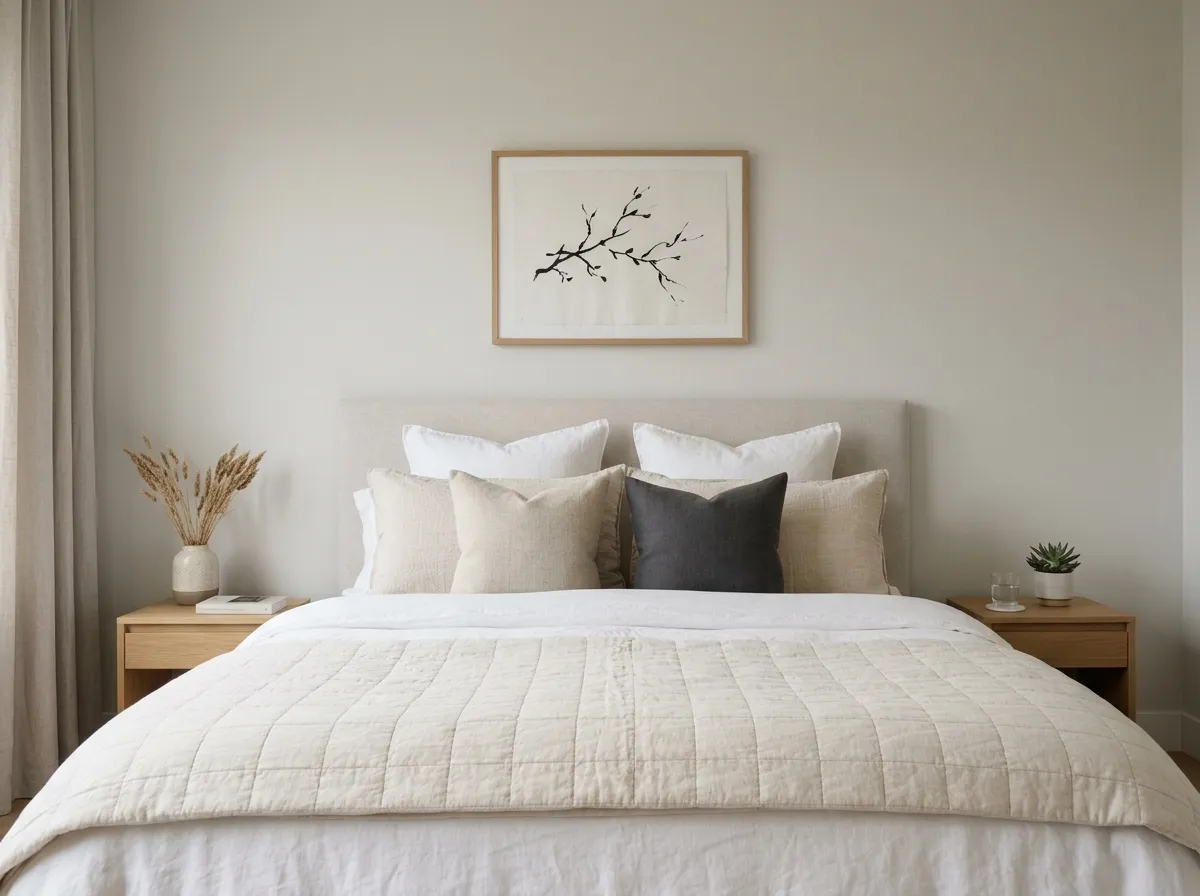
Interior design wall art scale should be set relative to the furniture below it, not the wall as a whole. Above a sofa, 60–75% of the sofa’s width is the standard formula; above a bed, 75–80% of the headboard width; above a console or sideboard, roughly two-thirds of the furniture width.
Hanging height follows the standard museum convention of 57 inches to the vertical centre of the piece for standalone interior design wall art not directly tied to a piece of furniture below it — hallways, stairwells, and feature walls without furniture reference. Standard print files run up to the 24×36 inch full-quality ceiling; for a wall that genuinely needs more, a same-technique triptych keeps every panel at full quality while reading as one cohesive piece. Trade & Designer Programme members can also request custom sizing above 24×36 inches for a small additional fee where a project specifically calls for it.
What to Avoid When Specifying Interior Design Wall Art
Choosing art before the palette is locked. Interior design wall art selected before flooring and primary fabrics are confirmed frequently needs to be reselected once those decisions are finalised, wasting a sourcing cycle.
Presenting without scale context. A print shown in isolation, without the furniture it will sit above, gives clients no real sense of how it will read in the finished room — and increases the odds of a post-installation revision request.
One-off, non-reprintable pieces for commercial handoffs. Original or limited pieces are appropriate for some residential briefs, but commercial wall art that can’t be reprinted at the same size for a future refresh or second site creates real problems for the client’s facilities team down the line.
Underspecifying the frame. A frame chosen at the last minute, without reference to the room’s existing metal and wood tones, can undermine an otherwise well-chosen print.
Skipping the rationale. Presenting interior design wall art with no explanation of why it was chosen invites more revision requests than a brief note on the reasoning behind the selection.
Interior Design Wall Art by Project Type — Complete Guide
The table below maps common project types to the most effective interior design wall art techniques, sizing approach, and presentation notes.
| Project Type | Best Technique | Sizing Approach | Presentation Note |
|---|---|---|---|
| Residential living room | Muted Canvas or Botanical Meadow | 60–75% of sofa width | Present in-context with fabric and rug samples |
| Residential bedroom | Muted Canvas or Smoke & Ink Wash | 75–80% of headboard width | Mock above rendered or photographed bed |
| Maximalist / eclectic brief | Gilt Edge Canvas or Botanical Meadow | Grouped pairs or trios, varied scale | Show full grouping, not single pieces |
| Minimalist / Scandinavian brief | Silver Grain Film | Single statement piece, generous negative space | Present against a clean, uncluttered mockup |
| Commercial reception / lobby | Muted Canvas or Gilt Edge Canvas | 24×36″ or same-technique triptych | Include facilities handoff documentation |
| Hospitality / hotel client | Gilt Edge Canvas or Silver Grain Film | Consistent technique across property | Specify per-room and per-corridor separately |
| Multi-project studio library | Two to three core techniques | Pre-approved sizing per common wall type | Maintain a shortlist for rapid reuse |
Recommended Products for Interior Design Wall Art
Everything you need to proof, frame, and install interior design wall art at the scale a client project demands.
Frequently Asked Questions
30off or 50off discount codes; members use whichever gives the larger saving on a given order. Interior designers, Airbnb hosts, hoteliers, restaurateurs, property developers, and stagers all qualify, and orders of 10 or more prints come with a complimentary 30-minute consultation.Interior Design Wall Art That Earns Client Sign-Off
The projects where interior design wall art lands well share a consistent pattern: it’s sourced alongside the rest of the scheme rather than after it, presented with real scale context rather than in isolation, and specified with the same rigour as any other line item in the proposal. None of this requires a bigger budget — it requires treating the wall as part of the design brief from the first concept meeting.
Digital download prints make this practical at almost any project scale. Start with the mood board. Get that one decision right, and every specification after it follows the same logic.
Shop Client-Ready Prints →