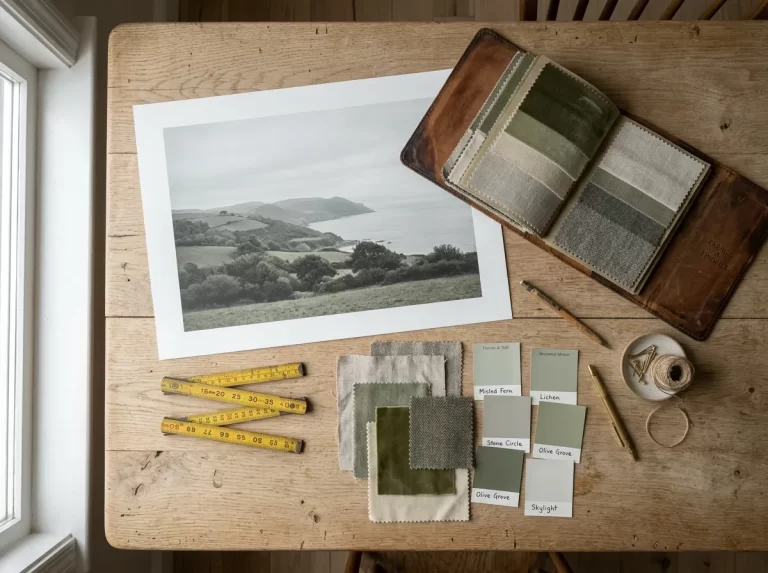
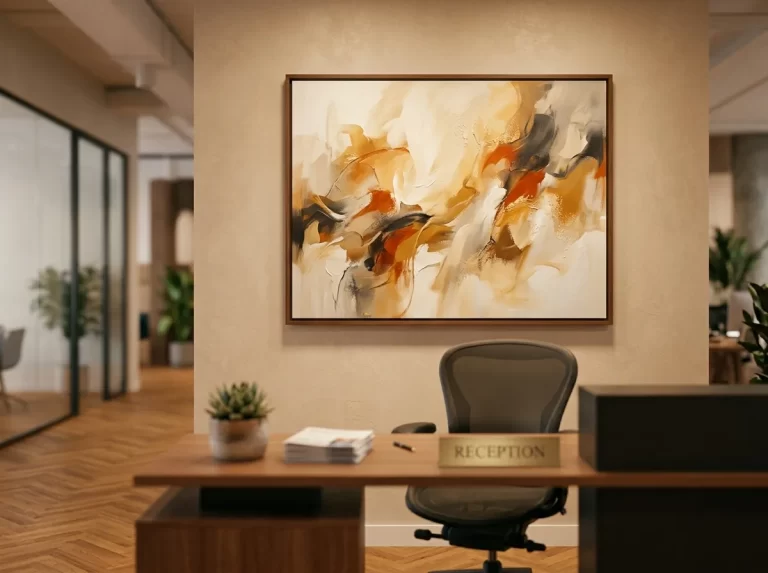
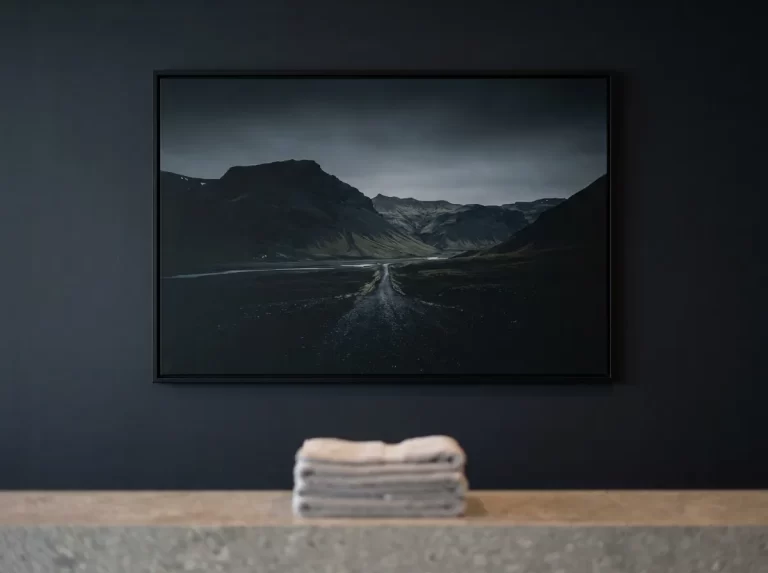
Retail wall decor is one of the cheapest ways to shape how a customer feels the moment they step through the door — before they’ve touched a single product. A bare wall reads as unfinished no matter how good the merchandise is; the right wall reads as a brand that knows exactly what it’s doing.
Good retail wall decor does three jobs at once: it reinforces brand identity without needing a sign, it guides where customers look and linger, and increasingly, it gives shoppers something worth photographing and sharing — which is free marketing every time it happens.
This guide covers twelve practical retail wall decor concepts, how to match them to different store formats, what they typically cost, and the placement habits that keep art working with the merchandise instead of against it.
One Statement Wall Behind the Checkout
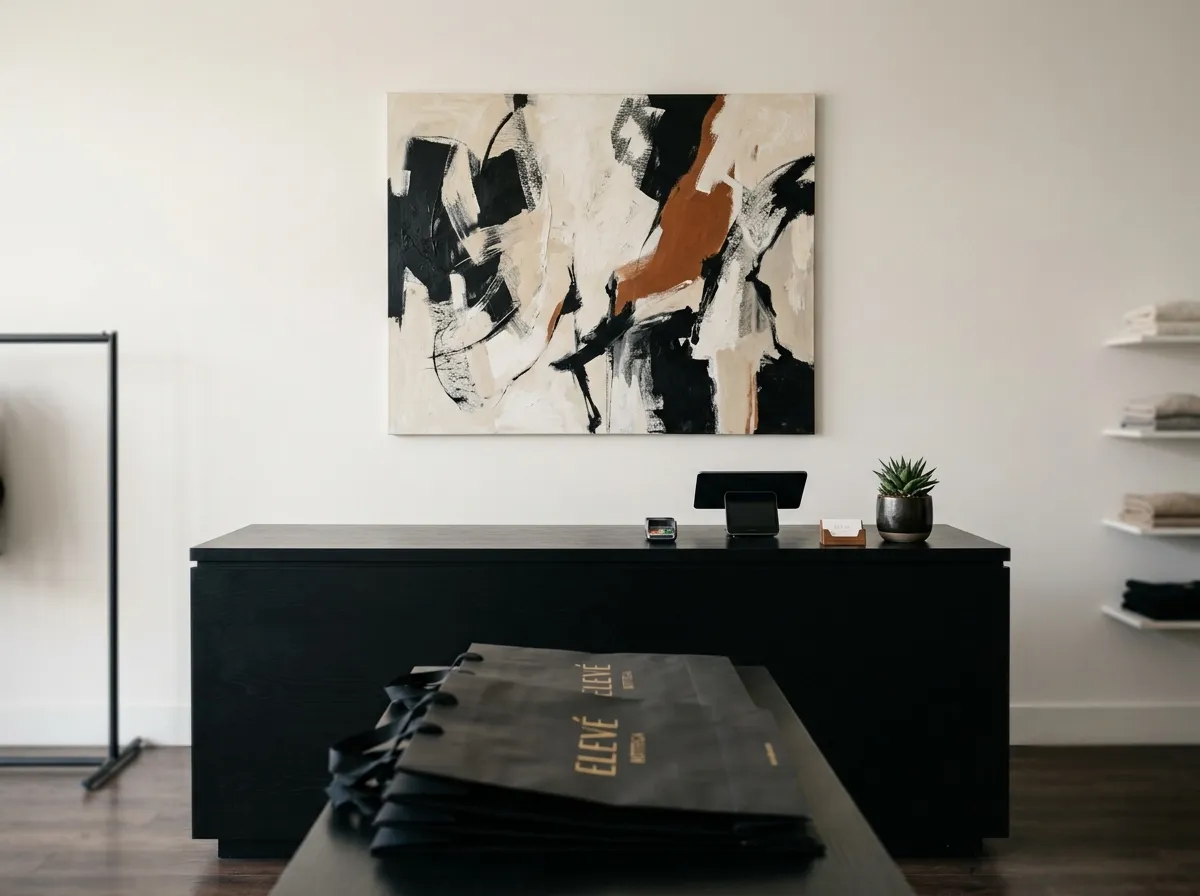
The checkout wall is one of the most-seen walls in any store — every customer faces it at the exact moment they’re about to buy. Retailers commonly invest specifically in checkout-area wall décor to make a statement of quality behind the register, and it’s one of the highest-impact places retail wall decor can go.
Keep it to one confident piece rather than several competing ones. Match the width to roughly the width of the counter below it so the composition reads as intentional.
Brand-Aligned Abstract Art for Instant Recognition
Abstract retail wall decor gives a brand room to show up without a wall-sized logo. Pull two or three colours directly from the brand palette into an otherwise neutral piece, and the space starts to feel unmistakably like the brand rather than a generic store.
This works especially well for brands that want to feel design-forward — the art becomes part of the identity rather than an afterthought hung once the fixtures were finished.
Black & White Photography for a Premium, Editorial Feel
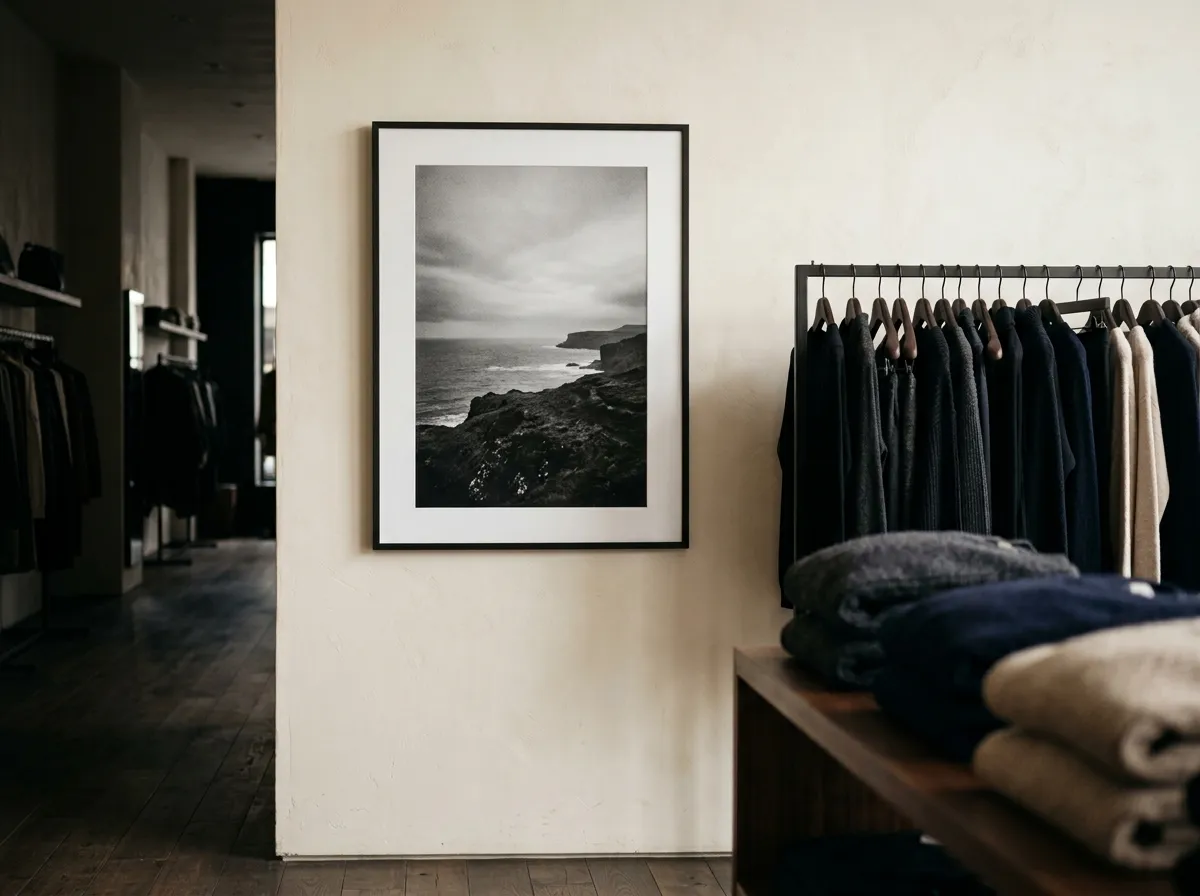
Black-and-white photography is one of the most dependable categories of retail wall decor — it doesn’t compete with the colours of the merchandise, it suits almost any category, and it lends even a young brand a sense of editorial polish.
It works particularly well along aisles and beside racks, where a busy or colourful piece would visually compete with the product itself.
A Camera-Ready Photo Wall for Social Sharing
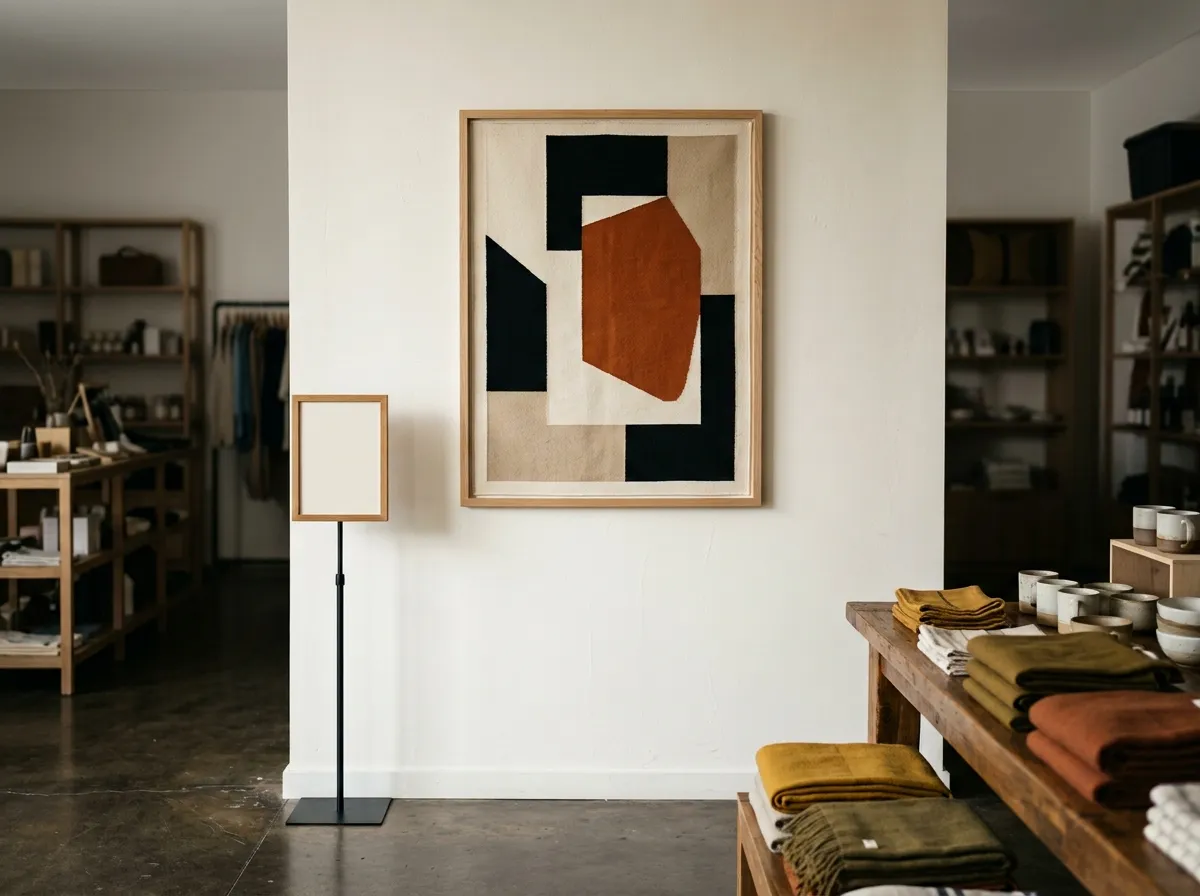
Turning one wall into a camera-ready moment is a widely used tactic to get customers marketing for a store on their own social feeds — a photogenic backdrop, a simple matte base, and one piece of striking retail wall decor is often all it takes.
Position it somewhere visible from the entrance or a natural pause point in the layout, and keep the surrounding area simple so the piece itself stays the focus of the photo.
Framed Product Story or Heritage Walls
For brands with a founding story or a craft process worth telling, a small, consistently framed series showing materials, early products, or the making process turns retail wall decor into part of the sales pitch itself.
Keep it restrained — three to five pieces maximum. A wall crowded with process photos reads as clutter rather than craftsmanship.
Minimalist Line Art for Boutique and Small-Format Stores
Small-format and boutique stores rarely have much spare wall space. Simple, minimalist line art brings personality without demanding much visual room, which matters when shelving and product displays are already doing most of the talking.
This is also some of the most affordable retail wall decor available, useful for boutiques furnishing more than one small location at once.
Textured Art for Luxury and Flagship Retail
For flagship and luxury stores, textured, mixed-media retail wall decor adds a layer of quality a flat print can’t match. High-quality materials and considered finishes are widely used to showcase premium or exclusive merchandise, and the same logic applies directly to the art chosen for that space.
Reserve this higher-budget option for the single most important wall in the store rather than spreading it across every fixture.
Neutral Backdrop Art for Fitting Rooms and Product Displays
Wherever the product itself needs to be the hero — fitting rooms, jewellery cases, tabletop product displays — retail wall decor should stay quiet. Soft, neutral tones behind a display let the merchandise carry all the visual weight.
This is the one place in a store where restraint matters more than personality. Save the bolder pieces for walls where nothing else is competing for attention.
Bold Typography for Fast-Fashion and Casual Brands
A single bold, well-designed typographic piece — a brand phrase, a playful line, the store’s name treated as art — gives casual and fast-fashion retail wall decor personality without needing a big budget. It photographs well and travels easily across a multi-location chain.
Use it once, as a clear focal point, rather than scattering smaller text pieces throughout the store.
Seasonal & Rotating Art for Merchandising Refreshes
Retail zones nearest the entrance and checkout are considered some of the highest-impact areas in a store, which makes them the natural place to rotate retail wall decor alongside seasonal merchandising changes.
Swapping one feature piece every four to six weeks — in step with new collections or seasonal displays — keeps regular customers noticing the store is actively curated rather than static.
Consistent Art Across Multi-Location Retail Chains
Chains with several locations benefit from a recognisable but not identical look — the same two or three retail wall decor styles used across every store, adjusted slightly for each floor plan. It builds a coherent brand experience without every location feeling copy-pasted.
This also simplifies future refreshes. When a piece is damaged or a store needs updating, a brand with a consistent art library can replace it quickly rather than starting from scratch at every site.
What to Avoid: Wall Decor That Competes With the Merchandise
A few retail wall decor mistakes come up again and again: art busy enough to distract from the product, palettes that clash with what’s on the racks, and pieces placed directly behind a display case where they compete with the very thing meant to be sold.
The simplest test: if a customer’s eye goes to the wall instead of the product at the wrong moment, the balance is off.
Retail Wall Decor: Which Concept Fits Which Store?
Still deciding where to start? This table matches each retail wall decor concept to the store format it suits best, along with the typical mood and budget level.
| Concept | Best Store Format | Mood | Budget Level |
|---|---|---|---|
| Statement Wall Behind Checkout | Any full-service store | Confident, curated | Medium–High |
| Brand-Aligned Abstract | Design-led boutiques | On-brand, modern | Medium |
| Black & White Photography | Any category, aisles | Editorial, premium | Low–Medium |
| Camera-Ready Photo Wall | Social-first, younger brands | Photogenic, shareable | Low–Medium |
| Framed Product Story | Craft and heritage brands | Storied, authentic | Low–Medium |
| Minimalist Line Art | Small-format boutiques | Light, unobtrusive | Low |
| Textured Art | Luxury, flagship stores | Tactile, refined | Medium–High |
| Neutral Backdrop Art | Fitting rooms, display cases | Quiet, supportive | Low |
| Bold Typography | Fast-fashion, casual | Playful, branded | Low |
| Seasonal Rotation | Fashion, seasonal retail | Fresh, current | Low |
| Multi-Location Consistent Set | Retail chains | Branded, recognisable | Medium |
Who Each Retail Wall Decor Approach Suits
The right retail wall decor depends heavily on the kind of store and customer you’re serving. These four starting points cover most retail formats.
Minimalist line art and a single statement checkout piece. Retail wall decor here should feel curated and personal, not mass-produced.
Bold typography and camera-ready photo walls work best. Retail wall decor can afford to be playful, colourful, and highly shareable.
Textured art and framed product story walls project quality and craft. Retail wall decor should feel like an investment, not decoration.
A consistent, recognisable retail wall decor library across two or three styles keeps every store on-brand without a full redesign per site.
Retail Wall Decor: Placement Basics
Even well-chosen retail wall decor can underperform if it’s placed where it competes with merchandise or interrupts the customer’s path through the store.
Keep the centre of the piece at roughly 57 inches from the floor, and be deliberate about which walls carry art versus which walls carry product. Retailers commonly build a strong “power wall” on the side customers naturally turn toward on entry, making that wall a strong candidate for a lead retail wall decor piece.
Apply the same height and framing consistently across every location. It’s a small detail, but it’s what makes a multi-store brand feel coordinated rather than assembled site by site.
Retail Wall Decor Budget Guide
Budget depends heavily on the size of the lead wall and how often it needs to rotate with merchandising. Here’s roughly what to expect.
| Option | Typical Cost Range | Best For |
|---|---|---|
| Digital download + local print/frame | Lowest cost | Small boutiques, multi-location chains |
| Ready-made framed print | Low–Medium | Aisles, fitting room walls |
| Large statement canvas | Medium–High | Checkout, entrance wall |
| Custom brand-matched print | High | Design-forward retail brands |
| Commissioned mural or installation | Highest | Flagship or destination stores |
For most independent retailers, the most efficient approach is a mix: one higher-budget statement piece for the checkout or entrance wall, and lower-cost retail wall decor — digital downloads or ready-made prints — everywhere else.
Recommended Products for Retail Wall Decor
Everything you need to source, frame, hang, and rotate retail wall decor across a single store or a multi-location chain.
Frequently Asked Questions
The Bottom Line
Retail wall decor isn’t separate from the sale — it’s part of it. The right piece reinforces the brand before a customer touches a single product, gives them a reason to linger, and occasionally gives them a reason to photograph the space and share it for free.
Start with one wall — the checkout, or the wall facing the entrance. Get that one right, and the rest of the store follows the same logic.
Shop Retail Wall Decor →